
Not so long ago, I found myself in a conversation with a certain type of individual who, when I paused to open a bottle of riesling from New York State and offered them a glass, looked at me and stated, with pride, “I don’t drink white wine.” I poured myself a glass and pondered that statement.
What they did drink were expensive bottles of red. Bottles that they let everyone (or at least those on their social media feeds) know they had purchased. I pitied this person then, and I reckon I do still. One of my tenets is that drinking wine does not make you sophisticated, no matter the price you paid for it. The bottle, so to speak, does not the man (or woman) make. I’m not sure if this individual has changed their mind about white wine, but I am certain that their need for that type of self-aggrandizement is alive and well.
I thought of this person and their personality when I sampled a few bottles of wine this week, an albariño from Spain and a picpoul de pinet from France. Inexpensive wines, enjoyable and delicious. I smiled, briefly, then forgot my misguided acquaintance entirely when I tasted the wines.
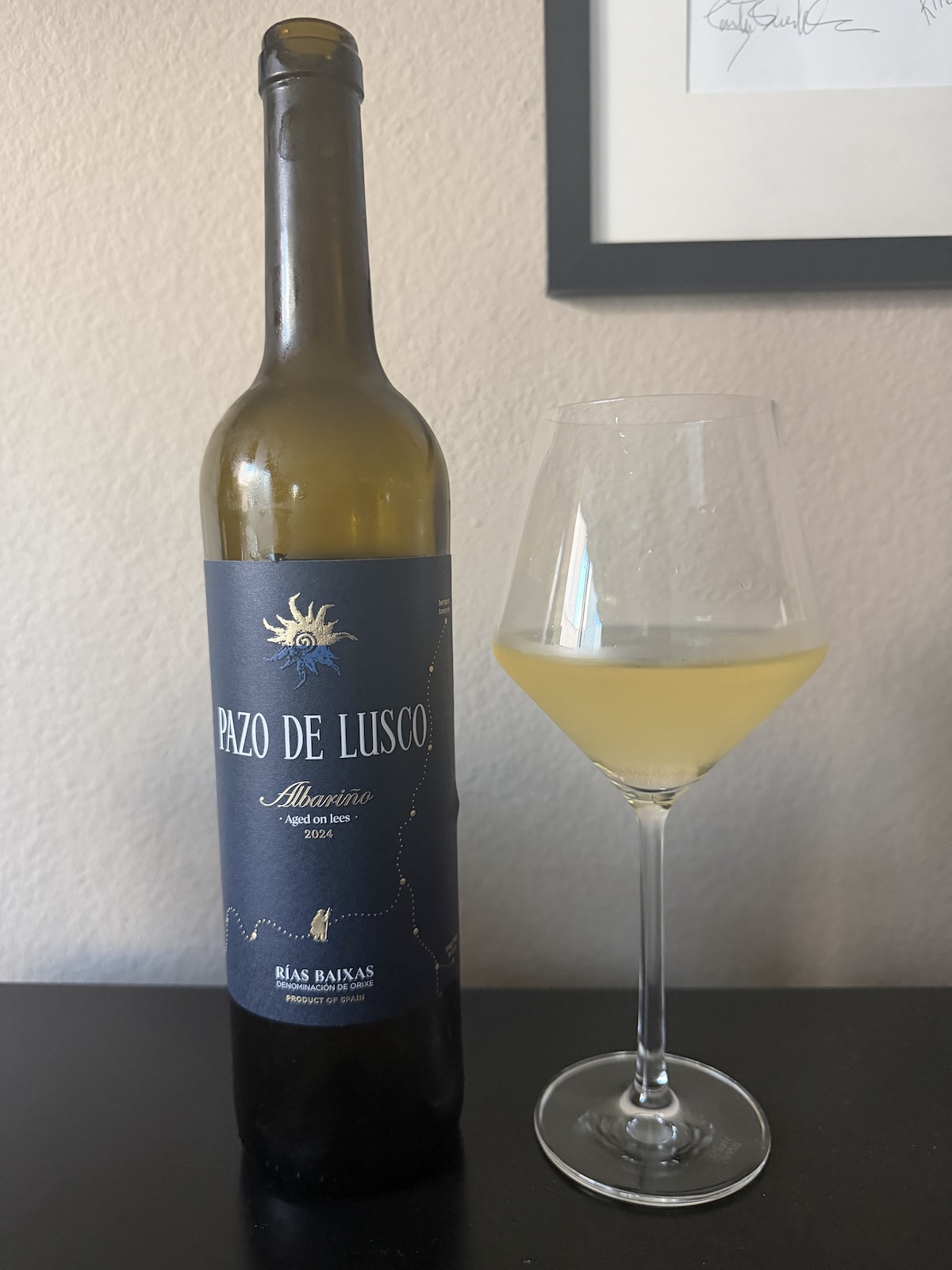
The albariño, from Adega Pazos de Lusco — “lusco” is Galician for “twilight,” and one can imagine opening a bottle of this on a terrace overlooking the sea as the sun is beginning to set, platter of freshly shucked oysters at hand — is dry, was aged on its lees, and fermented with native yeasts.
Notes of toasted pear and brûléed lemon mark the pour’s aroma, along with an intriquingly evanescent note of briny green melon. My first taste of this wine brought the word “green” to mind, and the flinty profile here satisfies well.

Adega Pazos de Lusco is located in Galicia, about 2 kilometers from the Portuguese border, in Condado do Tea (County of Tea), a subzone of the Rías Baixas appellation. It has been part of Familia González Byass since 2016.
The winemakers gave this an 8-hour cold soak at 8 degrees Celsius, followed by 25 days of fermentation in stainless steel tanks. It’s filtered and fined. Alcohol is 13 percent. Pair with small and cold oysters, butter-poached shrimp or lobster, or baked mullet. Suggested retail price is $31, but it is often found at lower prices. Search here.
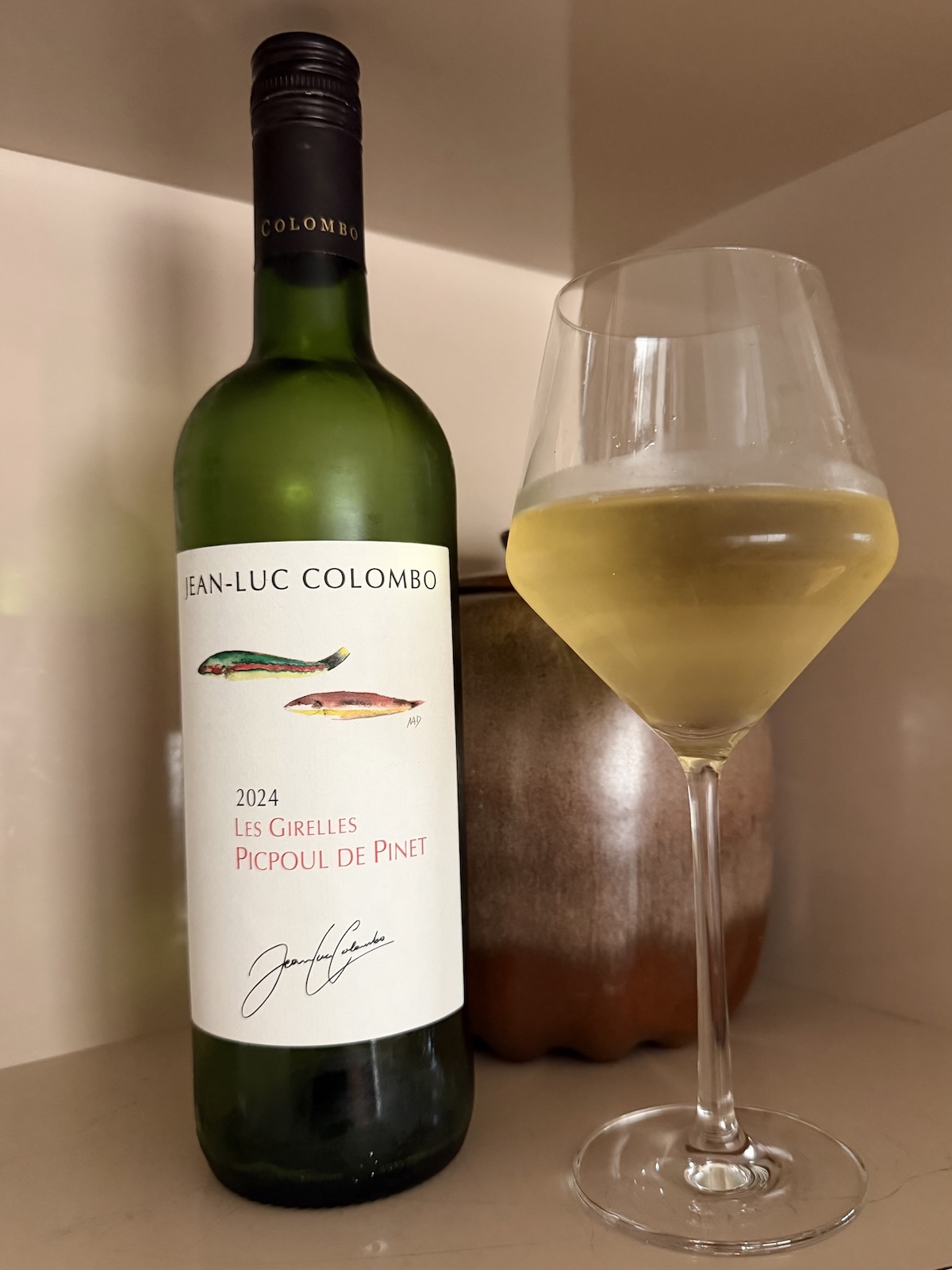
In 2024 my partner and I, along with another couple, visited Jean-Luc Colombo’s beautiful vineyards near Cornas during a birthday trip to Burgundy and the Northern Rhône. Colombo’s sites there overlook the Rhône River, and produce some great wines. I like the man’s fierce dedication to his winemaking and lands, and was happy to have recently sampled a wine of his made in another region of France, namely, Languedoc-Roussillon.
A girelle is a fish, known in English as a wrasse, and this bottle from Colombo displays a pair of rainbow wrasses on its label. The males are resplendent, and display bands of yellow and green and blue and orange, which often appear to shimmer and change hue. They are also lively fish, darting energtically to and fro in the waters of the Mediterranean.

While Colombo’s picpoul de pinet is not as colorful as the male wrasse, it is a lively and aromatic wine full of freshness and structure. It’s 100 percent piquepoul blanc, a grape naturally high in acidity, a “lip-stinging” pour that is meant to be served chilled (54 degrees Fahreheit is ideal). I paired it with a cold lobster salad, and would also happily drink it while dining on raw oysters, Dungeness crab, or a seafood platter. Beautiful citrus on the nose and palate — lemon and grapefruit — as well as some acacia and brininess throughout. I’ve not had a more enjoyable wine at its suggested $18 retail price. Look for it here.
If I should happen to find myself at a table alongside the individual mentioned above, the one who disdained my riesling, I’ll likely offer them a pour from my bottle, because it’s the polite thing to do, no? It might be an albariño or a simple muscadet, or perhaps it will be a Grand Cru Chablis or a magnum of Krug. You see, I have nothing against expensive wines; in fact, I have liked or loved nearly every single one of them I have drunk. I do, however, detest drinking in the company of snobs. That turns spending time with even the best of wines into a loathsome experience.
Discover more from Mise en Place
Subscribe to get the latest posts sent to your email.


Leave a Reply