Not so long ago, I found myself in a conversation with a certain type of individual who, when I paused to open a bottle of riesling from New York State and offered them a glass, looked at me and stated, with pride, “I don’t drink white wine.” I poured myself a glass and pondered that statement.
What they did drink were expensive bottles of red. Bottles that they let everyone (or at least those on their social media feeds) know they had purchased. I pitied this person then, and I reckon I do still. One of my tenets is that drinking wine does not make you sophisticated, no matter the price you paid for it. The bottle, so to speak, does not the man (or woman) make. I’m not sure if this individual has changed their mind about white wine, but I am certain that their need for that type of self-aggrandizement is alive and well.
I thought of this person and their personality when I sampled a few bottles of wine this week, an albariño from Spain and a picpoul de pinet from France. Inexpensive wines, enjoyable and delicious. I smiled, briefly, then forgot my misguided acquaintance entirely when I tasted the wines.
An albariño that calls out for oysters. (Brockhaus Images)
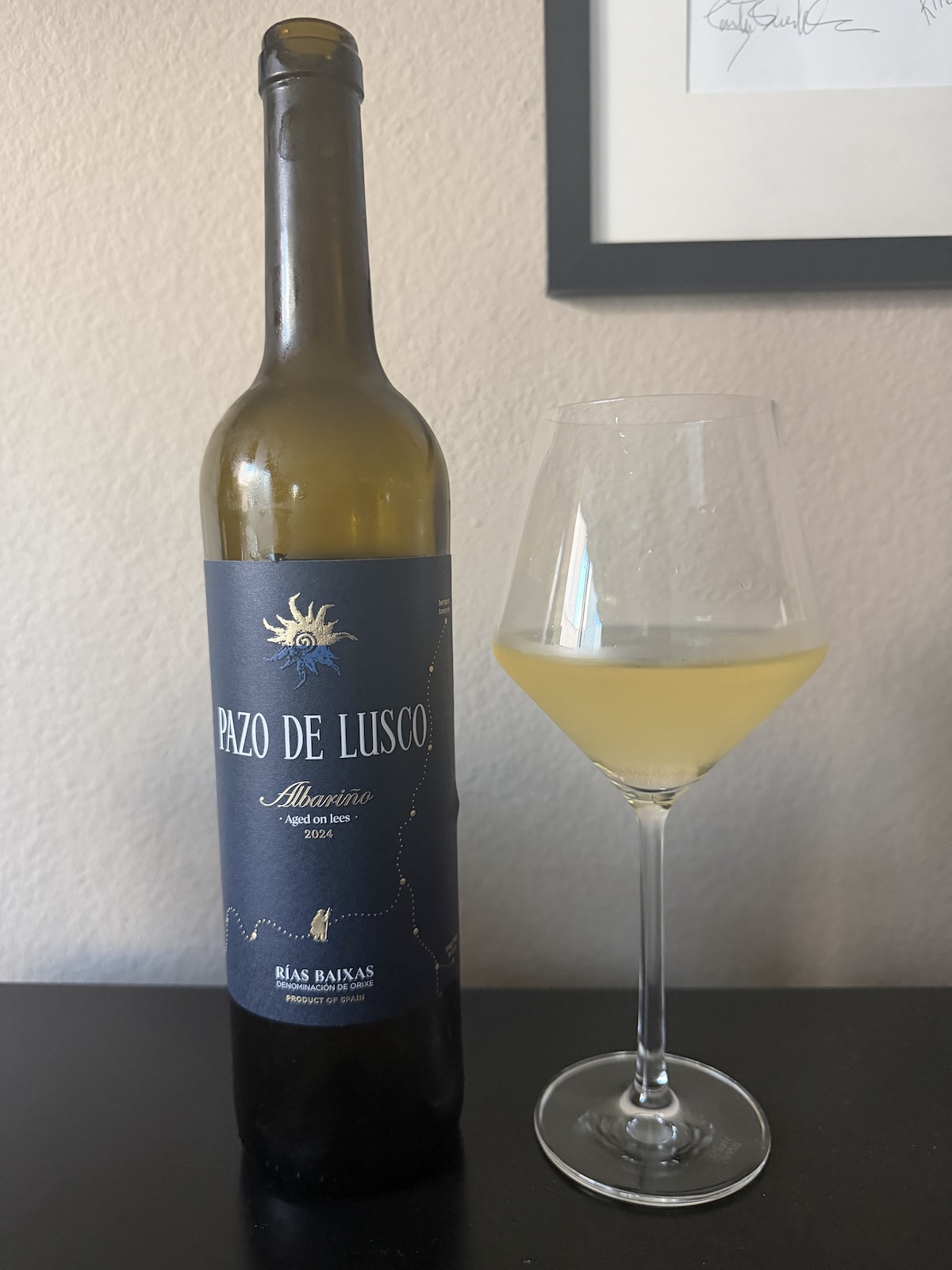
The albariño, from Adega Pazos de Lusco — “lusco” is Galician for “twilight,” and one can imagine opening a bottle of this on a terrace overlooking the sea as the sun is beginning to set, platter of freshly shucked oysters at hand — is dry, was aged on its lees, and fermented with native yeasts.
Notes of toasted pear and brûléed lemon mark the pour’s aroma, along with an intriquingly evanescent note of briny green melon. My first taste of this wine brought the word “green” to mind, and the flinty profile here satisfies well.
Adega Pazos de Lusco is located in Galicia, close to Spain’s border with Portugal. (Familia González Byass)
Adega Pazos de Lusco is located in Galicia, about 2 kilometers from the Portuguese border, in Condado do Tea (County of Tea), a subzone of the Rías Baixas appellation. It has been part of Familia González Byass since 2016.
The winemakers gave this an 8-hour cold soak at 8 degrees Celsius, followed by 25 days of fermentation in stainless steel tanks. It’s filtered and fined. Alcohol is 13 percent. Pair with small and cold oysters, butter-poached shrimp or lobster, or baked mullet. Suggested retail price is $31, but it is often found at lower prices. Search here.
Try pairing this wine, from Jean-Luc Colombo, with a lobster salad. (Brockhaus Images)
In 2024 my partner and I, along with another couple, visited Jean-Luc Colombo’s beautiful vineyards near Cornas during a birthday trip to Burgundy and the Northern Rhône. Colombo’s sites there overlook the Rhône River, and produce some great wines. I like the man’s fierce dedication to his winemaking and lands, and was happy to have recently sampled a wine of his made in another region of France, namely, Languedoc-Roussillon.
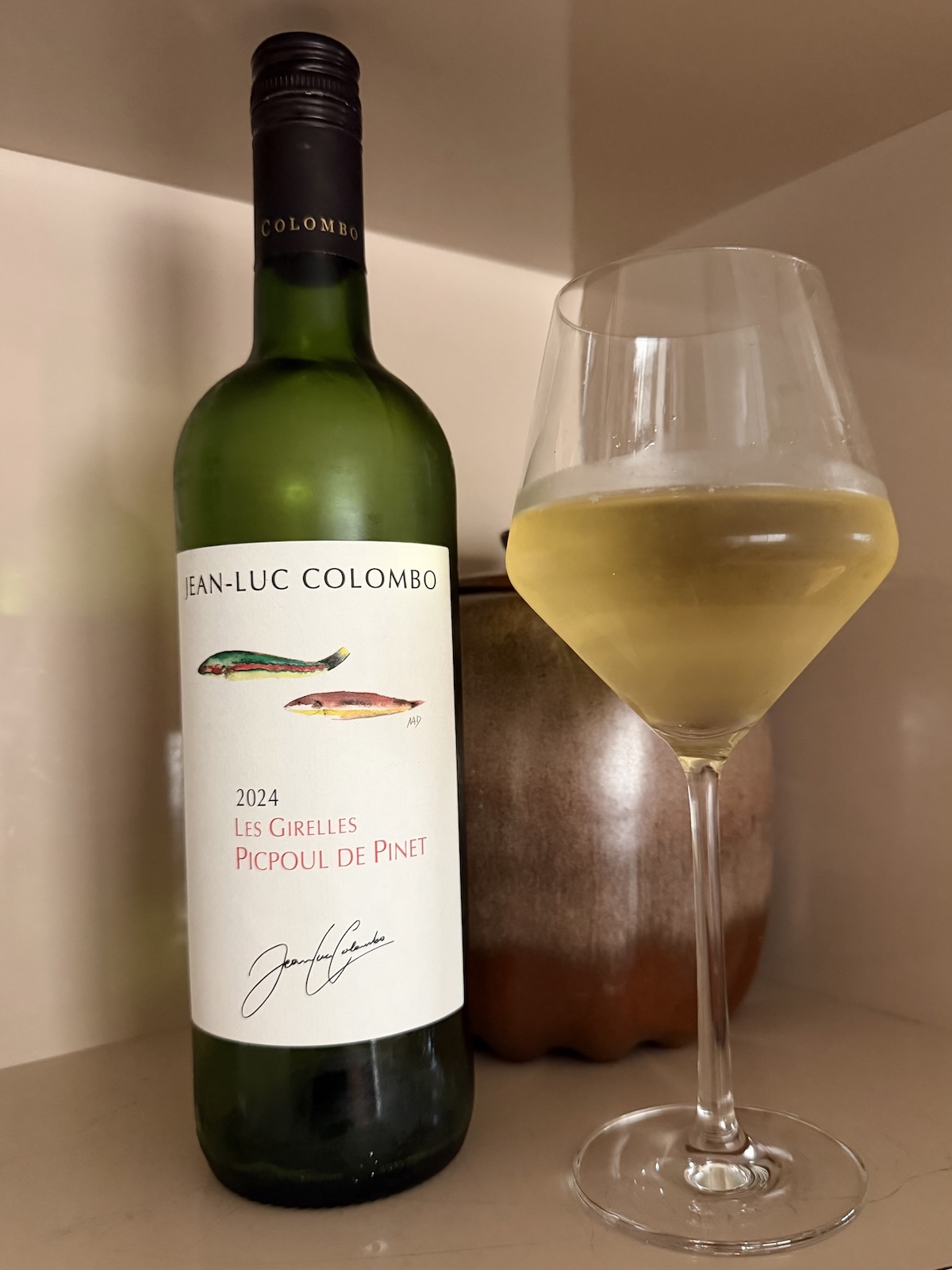
A girelle is a fish, known in English as a wrasse, and this bottle from Colombo displays a pair of rainbow wrasses on its label. The males are resplendent, and display bands of yellow and green and blue and orange, which often appear to shimmer and change hue. They are also lively fish, darting energtically to and fro in the waters of the Mediterranean.
Jean-Luc Colombo is a man of strong and outspoken passion and pride. (Vins Jean-Luc Colombo)
While Colombo’s picpoul de pinet is not as colorful as the male wrasse, it is a lively and aromatic wine full of freshness and structure. It’s 100 percent piquepoul blanc, a grape naturally high in acidity, a “lip-stinging” pour that is meant to be served chilled (54 degrees Fahreheit is ideal). I paired it with a cold lobster salad, and would also happily drink it while dining on raw oysters, Dungeness crab, or a seafood platter. Beautiful citrus on the nose and palate — lemon and grapefruit — as well as some acacia and brininess throughout. I’ve not had a more enjoyable wine at its suggested $18 retail price. Look for it here.
If I should happen to find myself at a table alongside the individual mentioned above, the one who disdained my riesling, I’ll likely offer them a pour from my bottle, because it’s the polite thing to do, no? It might be an albariño or a simple muscadet, or perhaps it will be a Grand Cru Chablis or a magnum of Krug. You see, I have nothing against expensive wines; in fact, I have liked or loved nearly every single one of them I have drunk. I do, however, detest drinking in the company of snobs. That turns spending time with even the best of wines into a loathsome experience.
Last Sunday I attended a party devoted to rosé, an annual gathering organized and hosted by several individuals in the wine industry. It takes place in the backyard of a home in Santa Monica graced by a beautiful coast redwood tree, and serves as a reunion for may of the attendees, as well as an occasion for many to meet people new to them. Not everyone at the party is in the wine business, but many are, and the wines assembled by attendees are myriad and diverse, though all are rosés.
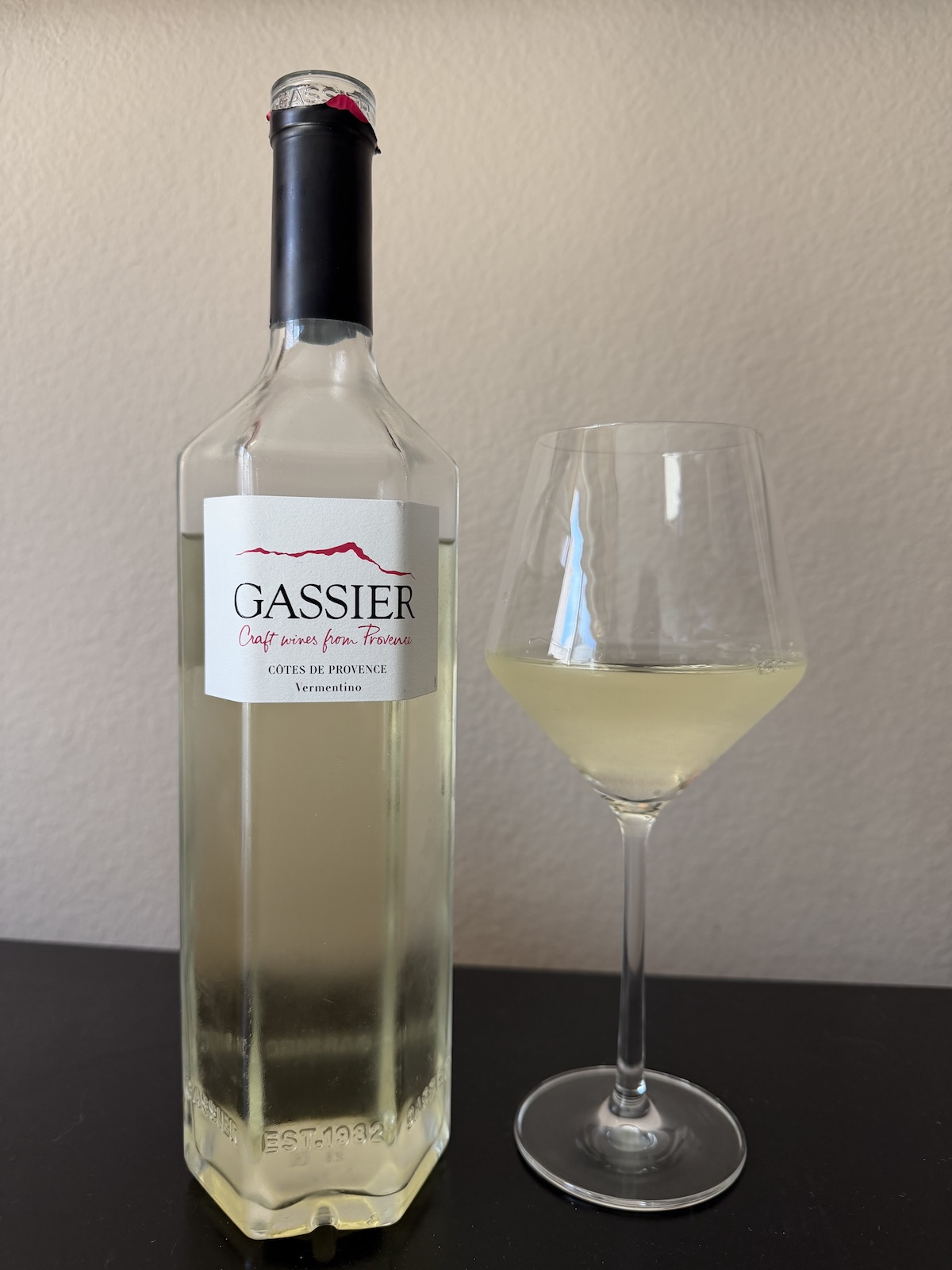
Coincidentally, I sampled a wine this week from a legendary land of rosés that I liked immensely. But it’s not a rosé. It’s the 2025 Château Gassier Côtes de Provence Blanc, 100 percent vermentino, made by Léa Rouyet, a Basque Country-born winemaker who’s been at Gassier since 2015.
A wine from a beautiful, sun-drenched region of France. (Brockhaus Images)
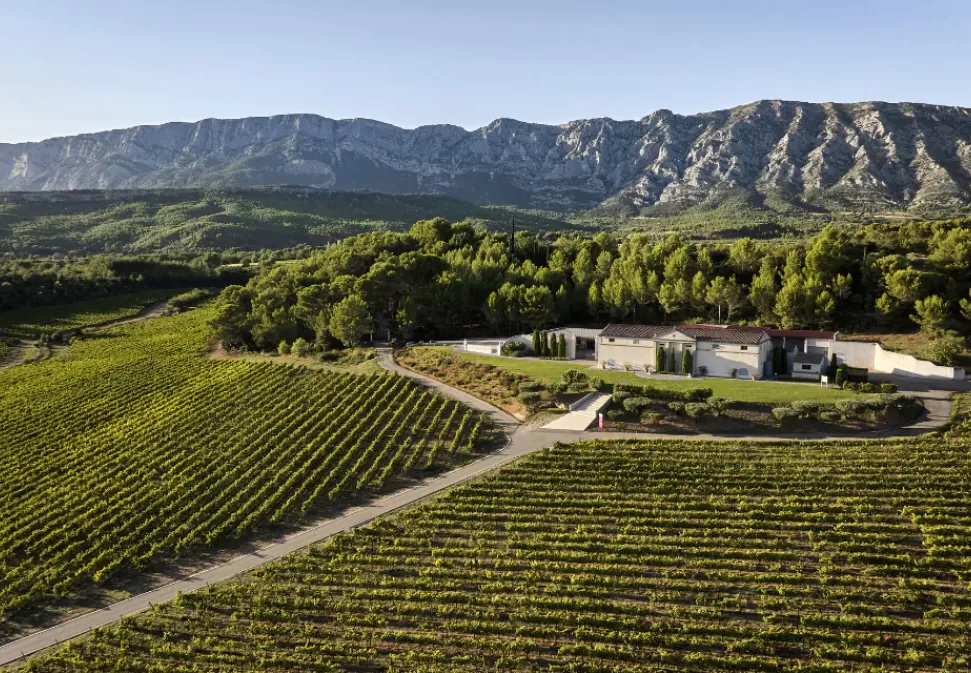
This wine hails from Sainte-Victoire, a storied area replete with vineyards that produce elegant rosés and stellar, if underappreciated by many, whites. Gassier harvests the wine’s fruit at night, which helps reduce oxidation. Direct and slow pressing, with minimal contact between skins and juice, gives a freshness and seductive color to the finished project. Poor soils of clay and limestone have created a wine with a rich body and energetic, stellar acidity.
The Gassier winery, in Puyloubier, France, sits at the foot of Mont Sainte-Victoire. (Château Gassier)
In the glass this wine is very light in color, and appears almost irridescent in certain light. Aromas of white stone fruit and lemon blossom dominate, followed by soft melon and minerality on the palate. This is a thoroughly refreshing wine, one that I paired with a honeydew melon and prosciutto. It would also pair well with oysters or a tuna ceviche.
Léa Rouyet is the winemaker at Château Gassier. (Château Gassier.)
This wine sells for around $20, and is a good one to have around for when that impromptu guest stops by. I have a bottle in my refrigerator now, and look forward to opening it soon. Find it here.
Seyval blanc. Heard of it? If not, you are not to feel badly. While it is a grape that has been around for a while, and has proven its place in the wine world, it is not widely planted in North America — estimates hover between 700 and 900 acres in the United States and Canada. For comparison, upwards of 75,000 acres of pinot noir, and more than 115,000 of cabernet sauvignon, are planted in the two countries.
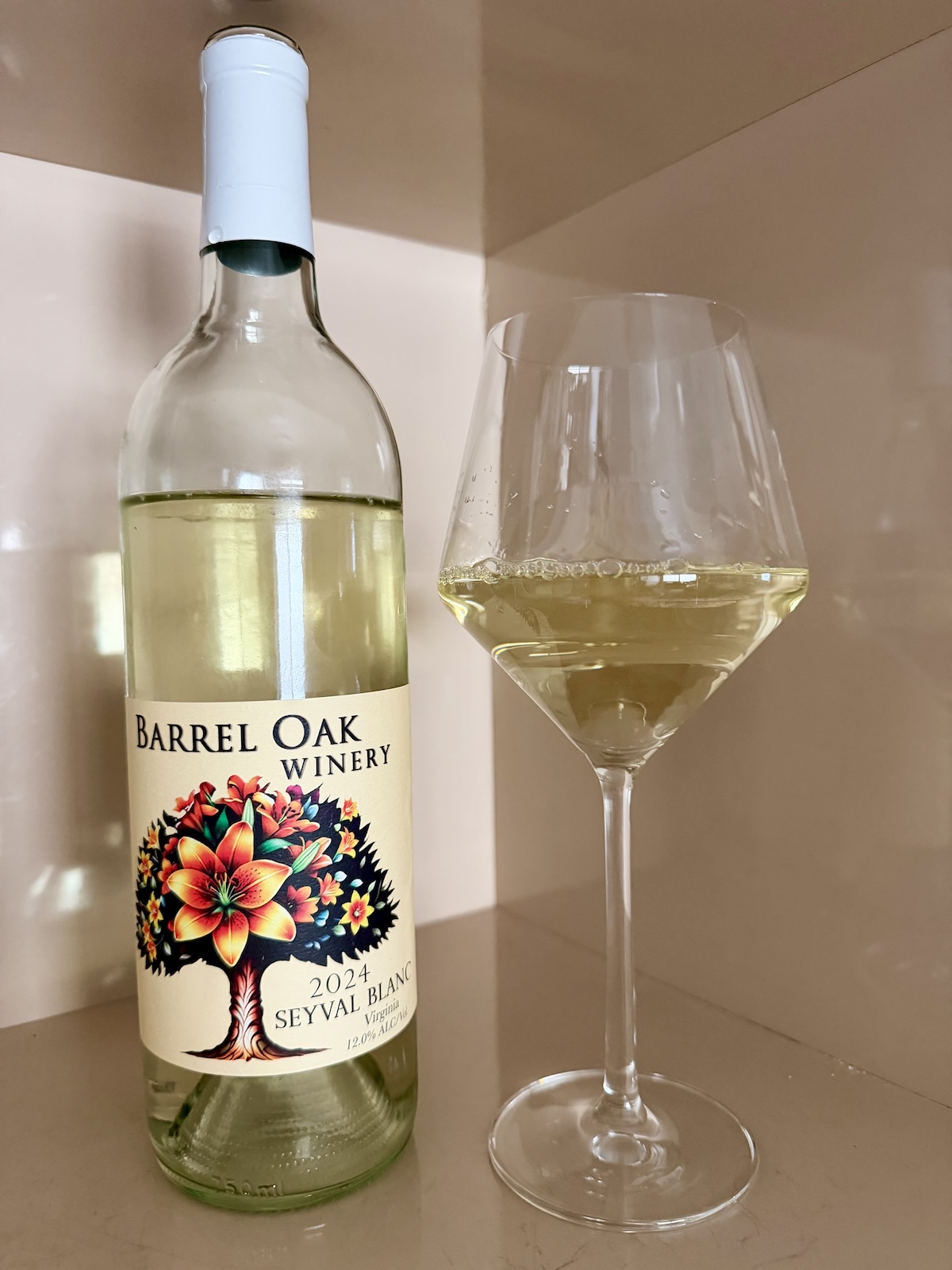
This is 100 percent seyval blanc from Virginia’s Barrel Oak Winery & Brewery. (Brockhaus Images)
Seyval blanc is a hybrid, and was developed by Bertille Seyve and his father-in-law, Victor Villard, in the 1920s in their nursery in France. For those who appreciate such information, it is a cross of 50 percent Vitis vinifera, 37 percent Vitis rupestris, and 13 percent Vitis licencumii. It is a high-acid grape, and it tends to ripen early, which makes it particulary suited to cooler climates.
And cooler regions is where it shines, including England, where makers of sparkling wine are using it to great effect; the Finger Lakes region; Canada; and the Lake Erie AVA.
Virginia is also a player here, a state in which recent statistics indicate that about 40 acres of seyval blanc are planted. It is produced by myriad wineries, including Barrel Oak Winery & Brewery, a 78-acre estate responsible for my wine of the day.
Barrel Oak Winery & Brewery encompasses 78 acres in Virginia’s Piedmont region. (Barrel Oak Winery)
The 2024 Barrel Oak Seyval Blanc is a cork-closure wine whose fruit is grown in the estate’s B-Block plot, which is situated between 500 and 700 feet above sea level in the Middleburg AVA. Soils are marked by clay with deposits of gneiss and granite, a composition that gives this wine an appealing minerality on the palate. Alcohol is 11.25 percent, 353 cases were produced, and it did not go through malolactic conversion. This is an all-stainless steel creation, crisp, bright, and lively.
Jeremy Ligon, Barrel Oak winemaker, joined the estate in 2021. (Barrel Oak Winery & Brewery)
In the glass, the wine is a pale, soft yellow, and body is light to light-plus. Harvest brix of 22.0 should leave us with ample acidity, and a first taste of the wine makes that evident. Orange flower is definitely in the aroma and on the palate, along with bright apple, perhaps Granny Smith. I served this bottle with sautéed crayfish and angel hair pasta, and the winemaker team, led by Jeremy Ligon, suggests seared trout with lemon and capers, which I’ll try next time I drink this wine. It carries a suggested retail price of $30 (purchase from the producer or search here.
I’m working on a profile of Barrel Oak that will include a discussion with Ligon, and I’ll soon be sampling the estate’s 2022 Chocolate Lab, a port-style product, and the 2023 Vidal Blanc. Keep your eye on Virginia, a state with more than 300 wineries within its borders.
This story was originally published in PaperCity on Sept. 1, 2026. Read the original version here.
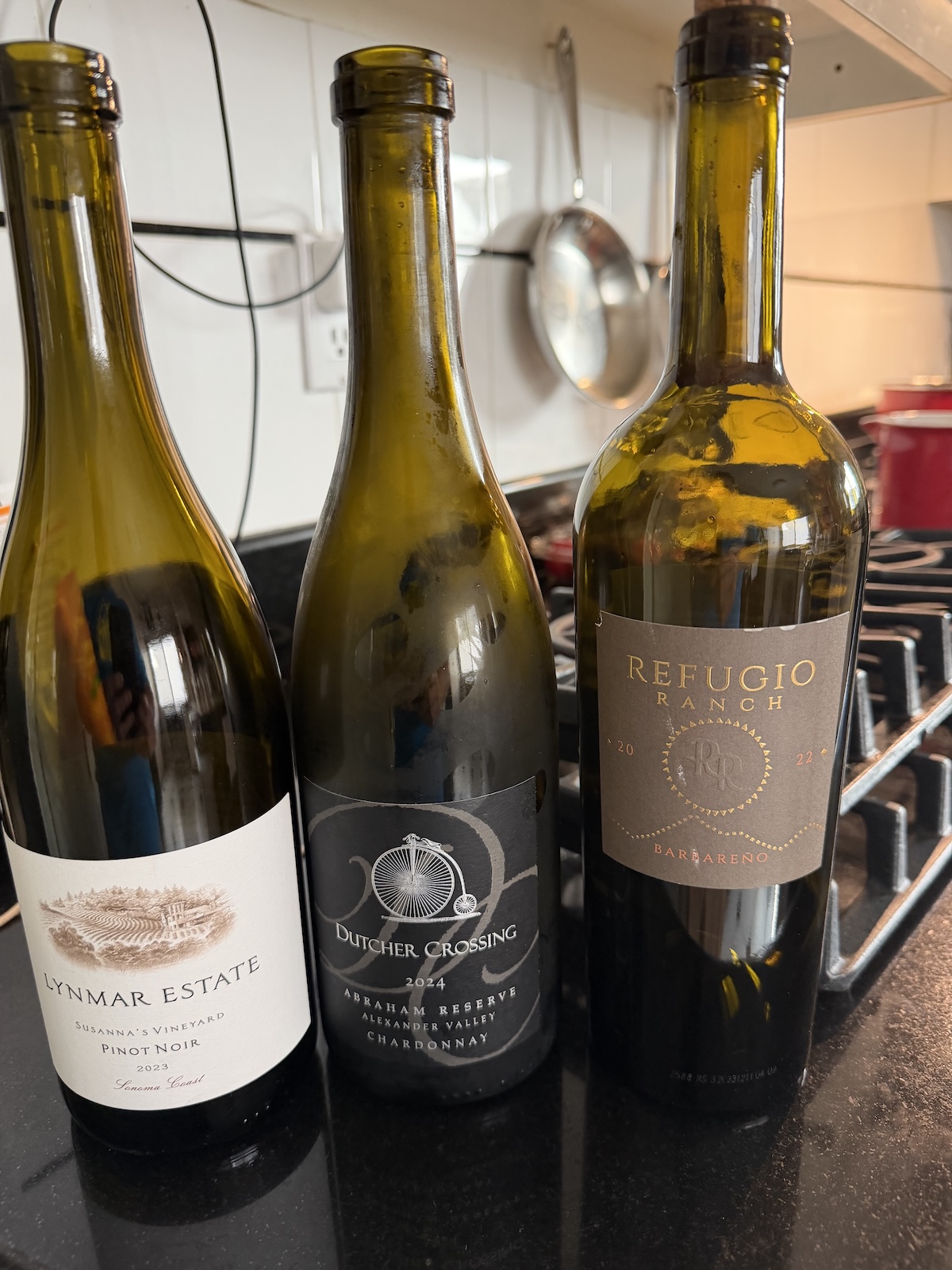
Debra Mathy is the owner of Dutcher Crossing Winery, a Dry Creek Valley estate that she purchased in 2007. A trip to France during high school, one that involved visits to a number of wineries, put an idea in her head: I want to one day make wine, and own a winery, she remembers telling her parents.
After a career in education, she made her dream come true. She purchased Dutcher Crossing and has been at the helm of the estate ever since. One of her wines is in this week’s Tasting Notes, which you can read here. You’ll also find bottles from Lynmar Estate and Refugio Ranch.
Vin de France, how I appreciate thee. You let winemakers focus on grapes no matter their provenance (the fruit, not the winemakers). You are young — VDF as a national classification was born in 2009 — and your potential is immense. You’ve been a great addition to a proud and prestigious legacy, and I think you will mature into a fine individual.
Chardonnay, grenache blanc, viognier, marsanne, mauzac, muscat, and clairette. They are all in this bottle. And skins and whole clusters are used. It’s an orange wine, from Gérard Bertrand, and I opened it yesterday and loved it. It has a suggested retail price of $24.99, and you can search for it here or wherever you like to buy your wine.
Lovely color in the bottle, lively aromatics in the glass. Gérard Bertrand’s 2023 Orange Gold, a vin de France.
The 2023 Orange Gold, a project that sings of the Mediterranean, offers peach, apricot, jasmine, and white pepper as entry points, and those aromatics carry on when one drinks this wine. Your palate might pick up on the notes of apricot and peaches, as mine did, along with a hint of oxidation that is intriguing. Body is medium to medium-plus, while the finish is long and fairly complex.
Bertrand sought to pay homage to the history of Georgian orange wines, and I think this one aced that assignment.
I paired this with a frisée salad whose stars were slices of goat cheese battered with egg and panko before frying and pieces of pears macerated in balsamic vinegar. This wine would also be great with a goat curry dish or a tray of your favorite cheeses.
Pay no attention to the hype and trendiness of orange wine; it’s been around a long time, and will outlast us all. It deserves better than hype.
A red wine from Paso Robles was on my sampling agenda this week, and it’s an easy-drinking blend of cabernet sauvignon (45 percent), primitivo (25 percent), petite sirah, Malbec, and pinot noir (all 10 percent).
The 2023 Highlands 41 Black Granite Red Blend carries a $15 suggested retail price, and it’s a great value for the money. Fruit comes from the Creston Highlands and Riboli Creston vineyards (both in the Creston District AVA). Highlands 41 is owned by Riboli Family Wines. (Buy it here, or find it near you using this.)
Pair this red blend with meatloaf, hamburgers, or grilled lamb chops.
Highlands 41 also makes a Paso Robles cabernet sauvignon and a pinot noir and chardonnay, both from Monterey County. Estate vineyards in Paso and Monterey are certified sustainable by the California Sustainable Winegrowing Alliance. The 2022 Black Granite was named by Wine Enthusiast as 2022’s top “Best Buy.”
Blackberry and raspberry dominate on the nose and the palate, along with vanilla, plum, and a touch of bramble. Tannins are medium. The winemakers used 10 percent new American oak barrels, 10 percent new French oak, and 80 percent neutral barrels. The blend was aged for 10 months, and alcohol rests at 13.9 percent.
The Riboli Creston Vineyard spans 320 acres in Paso Robles.
Pairings? I had a glass of this wine with a slice of pepperoni pizza, and it was a good marriage. This wine would be a great fit for your next casual gathering that features beef barbecue or grilled sausages, and pizza parties would also be an excellent idea.
Ciliegiolo. That’s an Italian word. It’s fun to pronounce. It’s fun to drink. And it leads this edition of Tasting Notes.
Ciliegiolo is a grape that originated in Italy, where it is found primarily, if not solely, in Tuscany, Lazio, Liguria, Puglia, and Umbria. The word translated into English means “small cherry;” its berries resemble that stone fruit and the wines made from them are redolent of cherries. It is not a variety that you are likely to have heard about on a regular basis, but those who know it are well aware of its value and importance. And since winemakers are paying more attention to it as a grape to shine on its own, as opposed to mainly blending it with Sangiovese to “soften” the latter’s profile, I hope this ancient grape will come to attract your attention on a more regular basis.
Ciliegiolo: An ancient grape with a disputed DNA. (Photo by Nick Belanger)
“In my view, Ciliegiolo is one of the most underappreciated grape varieties, allowing for wines of mesmerizingly pure aromas and flavors,” writes Ian D’Agata in “Native Wine Grapes of Italy” (2014), and I agree with him. (D’Agata’s book is one of my favorites on the subject, and if it is not in your library I urge you to acquire it, along with his more recent “Italy’s Native Wine Grape Terroirs.”)
Ciliegiolo’s parentage is the subject of ongoing debate. D’Agata included a compendium of DNA studies in his book that have been carried out on the variety, which was, according to the author, “most likely first described in the 1600s by Soderini, whose description of a Ciriegiuolo grapevine resembles the Ciliegiolo we know today.” D’Agata’s compendium is thorough and makes for fascinating study, and for readers who appreciate such things I recommend turning to page 248 of “Native Wine Grapes of Italy.” Suffice to say that researchers behind ongoing DNA analyses are sparring still as to the parentage and makeup of Ciliegiolo; is it a progeny of Sangiovese, or is it a natural cross of Sangiovese and Moscato Violetto? D’Agata concludes his say on the subject thusly: “Clearly, this is a matter that needs to be studied in more detail.”
I now embark on a brief journey into Giovan Vettorio Soderini, the Italian agronomist mentioned above, because I like history and biography and he had some influence on the craft of winemaking in Italy. Soderini, who was born in 1526 and died in 1596, was sentenced to beheading because of his protests against the Medici (he was born in Florence), but Ferdinando I de’Medici, Grand Duke of Tuscany, spared his life and banished him to Cedri, which today has a population of around 35 humans. Soderini had studied law and philosophy in Bologna, but turned his attention to agronomy following his banishment. Trattato della coltivazione delle viti, e del frutto che se ne puo cavare (“Treatise on the Cultivation of the Vineyard, and the Fruit That Can Be Obtained”) (Florence, Filippo Giunti, 1600) is according to many academicians his (posthumously published) masterwork, and copies of it can be purchased still today.
Back to Ciliegiolo, and a bottle of wine I sampled recently that leads this edition of “Tasting Notes.” It’s produced by Badia a Coltibuono and goes by the helpful name Chill Ya Jolo. It, too, is fun to pronounce, and I loved drinking it. It’s 100 percent Ciliegiolo, and sells for around $20. Yes, you should chill this wine well before drinking it.
Ciliegiolo: A grape that deserves wider recognition.
The 2024 Chill Ya Jolo was imminently approachable — I am looking forward to sampling the 2025 — and I tasted it after the bottle reached 65 degrees Fahrenheit. Winemaker Roberto Stucchi Prinetti, aided by consultant Maurizio Castelli, know what it means to put together a wine that makes you smile, and this one certainly does that. It comes with 12 percent alcohol, and 20,000 bottles were produced after aging in stainless steel.
Drink this with pizza, scallops, or a good hamburger.
Labels are made to attract the eye and impart information about the contents of a wine bottle. The ladybug (coccinella in Italian) on this one calls attention to Badia a Coltibuono’s approach to sustainable organic farming, and the Hesse quote is apt: Beauty is in the details.
Back to a little pertinent history now. Badia a Coltibuono — Abbey of the Good Harvest (or Cultivation) — was established in 1051 by Giovanni Gualberto (sainted in 1193 by Pope Celestine III), who founded the Benedictine Vallumbrosan order. It functioned as an abbey until 1810, when it was unable to withstand Napoleon’s assault on the Church. Michele Giuntini, a banker from Florence and ancestor of the current owners, the Stucchi Prinetti family, bought the property in 1846, and that began the estate’s journey to becoming a leader in the Chianti Classico universe.
This wine is liquid ruby; holding a glass to the light makes the Chill Ya Jolo even more inviting. The cherry aroma here is profound — it made me think of a time I had a particularly fresh basket of Lapins cherries and after rinsing sliced a few of them and caught their scent. A little heady, lots of vivacity.
I paired this wine with seared sea scallops; I put the Maillard reaction to good use and made sure that the scallops showed its effect, because that’s a mix of flavors you’ll remember for a long while. The wine’s brightness and lively fruit seemed made for the seafood, which was prepared with a briny vanilla cream sauce.
Chill Ya Jolo might be seen as a summer wine, but in my house wines similar to it are consumed around the year. No reason to put strictures on matters such as these.
The 2022 Nestweaver Sonoma Coast Pinot Noir is next, and it excited my senses for a good while following my initial taste. A subtle aroma blend of raspberry and sweet cherry put me in an expansive mood on the afternoon I sampled this wine, which was made by Patrick Nyeholt. A secondary note on the nose is dried mushroom, a scent that gives this wine a restrained wildness. Its garnet color in the glass promises what I discerned as seriousness.
Nestweaver Wines was launched in 2021 by Caren Frutig Hatton — you might know her as the co-founder of Arietta, which she established alongside her husband, Fritz Hatton, and John and Maggy Kongsgaard, in 1996. “Nestweaver represents the elegant, nuanced Pinot Noir I envisioned creating for over 20 years, and Patrick Nyeholt is the winemaker to bring my vision to fruition,” Frutig says.
Patrick Nyeholt, Caren Frutig Hatton, and Jeffrey Corpuel stand in the Corpuel Family Vineyard, located in California’s Sebastopol Hills. (Photo courtesy Nestweaver)
Some might question the wisdom of pricing the second vintage of a wine produced from purchased fruit at $125, but the market will have final say, as it almost always does. I will say that I have tasted a good number of wines sold at higher prices that satisfied me less than the Nestweaver did, and I’ll leave it at that.
The 2022 vintage — 14 percent alcohol, 122 cases produced, 100 percent Pinot Noir — saw 30 percent new French oak, and nine months of élevage resulted in something that is delicious now and worthy of aging; 140 cases were made. Frutig Hatton says her grandmother, who created a “loving sanctuary” for her family, was the inspiration for the wine, whose label was designed by Frutig Hatton’s daughter, Hattie.
Nestweaver represents the elegant, nuanced Pinot Noir I envisioned creating for over 20 years, and Patrick Nyeholt is the winemaker to bring my vision to fruition.
Nestweaver Wines founder Caren Fruitig Hatton
I find this a cerebral wine, and its soft tannins contribute an elegant touch. Fruit comes from the Corpuel Family Vineyard, a 7.6-acre Sebastopol Hills property planted to Pommard, Swan, and Vosne-Romanée clones by Ulises Valdez, who sadly passed away of a heart attack at the age of 49 in 2018.
Patrick Nyeholt is the head winemaker at Nestweaver, and serves as associate winemaker at Arietta.
I paired the Nestweaver Pinot Noir with a lamb chop seared simply with olive oil and rosemary; the wine gracefully melded with the protein’s gaminess, and the lamb elevated the wine’s midpalate. Nyeholt, who began working under Andy Erickson at Arietta in 2011 and was named head winemaker at Nestweaver in 2022, has produced an intriguing wine, one I hope to revisit soon.
I am a proponent of opening a bottle of sparkling wine as often as one can, be it Champagne, cava, or anything else bubbly and made well. Sharing a bottle with friends and family at the table is a ritual that can slow the pace of a hectic day, encouraging conversation and contemplation. Closing out this edition of Tasting Notes is a wine from Texas, the 2021 Heath Sparkling Wines Adoration. It has a suggested retail price of $61 — Heath club members can get it for $52 — and is a Pinot Noir-dominated blend: 77.2 percent of that sparkling mainstay, along with 17.2 percent Chardonnay, 3.8 percent Pinot Meunier, 1.5 percent Pinot Gris, and .3 percent Pinot Blanc.
Make a platter of spicy friend chicken and pair it with this sparkling rosé.
This sparkling rosé was sampled after being chilled to around 46 degrees Fahrenheit, a temperature that served it (and me) well. A beguiling pale coral hue invites one to sip and savor this wine, which smells of wild strawberry, Bing cherry, and rose petals, a balanced melange. In the mouth, red fruit flavors dominate, then a fine citrus blossom note comes along to finish the experience.
The Heath Adoration is classified as a Brut and has .75 percent residual sugar. It spent only 20 months on the lees, which likely explains the large, vigorous bubbles in the glass. The acidity here is impressive; I paired this bottle with a platter of fried chicken that I made with a slightly spicy batter, and the combination was nearly perfect.
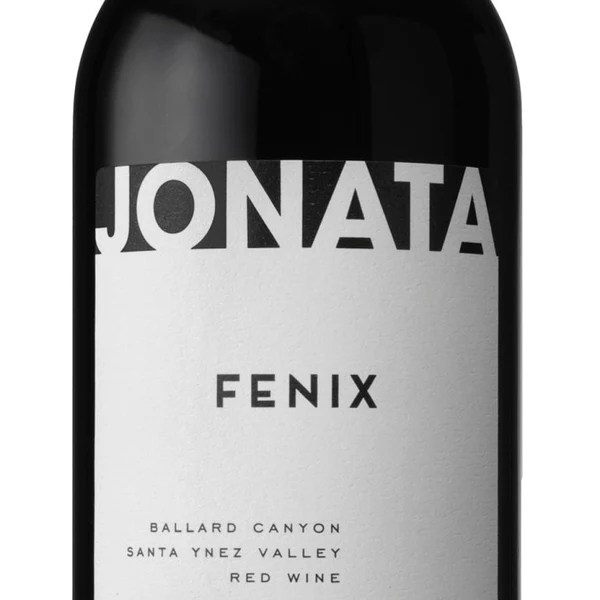
A Bordeaux-stye red blend from the Ballard Canyon AVA is up first in this edition of Tasting Notes, and it’s a selection many of you will want to add to your cellar or wine list. I tasted the 2021 Fenix, from Jonata, on a recent afternoon, along with a few other bottles, and this vintage puts on display the methodical yet agile and intuitive stewardship of winemaker Matt Dees.
The blend is 77 percent Merlot, 14 percent Cabernet Sauvignon, and 9 percent Cabernet Franc, and if you, as I do, love Cabernet Franc, you’ll enjoy the 2021 Fenix even more, because that grape was beautifully evident during my sampling, as it was the next day, when I poured the wine at dinner, pairing it with a duck breast seasoned with salt and star anise.
Where did Jonata get its name? Matt Dees explains. (Jonata)
Dees, who has been overseeing Stan Kroenke’s Jonata since 2004 (and whose purview now includes Kroenke projects The Hilt and The Paring) came to the profession without a degree in oenology, though he did earn a degree in plant and soil science at the University of Vermont, a curriculum relevant to winemaking.
Back to the 2021 Fenix, which was retailed with an average price of $100 (look for it on sites such as Benchmark Wine Group and K&L Wine Merchants, and inquire at your preferred local purveyor). You can also consider becoming a Jonata member for access to current releases and earlier vintages. The 2021 spent 20 months in 50 percent new French oak and 50 percent twice-used French oak barrels (225 liters). Note: One barrique holds 300 750-milliliter bottles of wine. Alcohol clocks in at 14.5 percent, and 1,265 cases of the 2021 were produced.
Dees recently told Levi Dalton in an episode of “I’ll Drink to That” that the Jonata vineyard is the sandiest he’s ever seen, adding that “it’s a beach.” When the Jonata team was surveying the property and assessing it for viability, several winemaking consultants told them that they would be better off growing asparagus or developing a golf course — the sand would be perfect for bunkers. I’m glad Dees didn’t listen to them. The soil there has been producing some stellar wines.
Matt Dees takes soil seriously.
Complex, decadent, focused, architectonic, confident. Those terms came to mind when I sat with the Fenix. Black and dark-blue fruit, buffed leather, and violet notes arouse the olfactory senses, while blackberries, sage, pristine forest floor, plum, and wild mushroom — perhaps chanterelles — meld wonderfully on the palate. Duck breast, as I wrote, pairs well with this wine, as would a rack of lamb. You need some fat to marry the robust (yet remarkably refined) tannins. This is a wine that will please you now, or in 10-plus years if cellared properly.
On to New Zealand
We’ll venture to a wine from New Zealand next, the 2022 Pencarrow Pinot Noir, which I tasted alongside another Pinot from that island country (the latter selection has among its team a very famous name — more on that below).
This Pinot Noir is a steal for $30.
Palliser Estate makes the Pencarrow line, which also includes a Chardonnay, a Pinot Gris, and a Sauvignon Blanc, all made from fruit sourced (100 percent) from Palliser estate’s Marlborough-based vineyards. Guy McMaster is the winemaker, alcohol is 14 percent, and 73 percent of the fruit came from the Pencarrow Vineyard, 24 percent from the Woolshed Vineyard, and 3 percent from the Pinnacles Vineyard. The (mainly) wild-fermented wine is cold-soaked, then pump-overs and plunging take place, followed by 10 months in oak barrels.
As with the Jonata Fenix, I sampled the Pencarrow Pinot Noir on a sunny afternoon immediately after opening the bottle (a screw cap) and finished it later with food. The wine is an attractive light ruby in the glass, an inviting hue. A faint white pepper note marks the aroma, along with wild raspberry, red cherry, and fruity nutmeg. Those profiles continue when one tastes the Pencarrow Pinot Noir, and I picked up some mushroom-centric umami as well. Tannins are powdery, and the finish is sustained. This wine, which retails in the $30-$35 range, is fun to drink, pure fun. Later that day I paired it with a meatloaf made from beef and pork and sun-dried tomatoes and could not have been happier.
A Famous Name
Does the name Sarah Jessica Parker ring a bell? It likely does. She is the famous individual to whom I referred earlier in this piece, and she’s the Invivo X proprietor — her official title with the brand. The 2022 Invivo X SJP Pinot Noir, which Wine Spectator placed at number 82 on its 2024 Top 100 wine list, closes out this edition of Tasting Notes. If you are skeptical of wines linked to celebrities, I understand, but that sector is too large and varied for blanket aversion. This bottle is worthy of your consideration.
From New Zealand comes this wine, which represents a great value.
Marlborough is the region from which the grapes for this wine hails — with a touch of Central Otago fruit added in. It has a suggested retail price of $25, which in my opinion is more than fair. This Pinot Noir is a bit darker in the glass than is the Pencarrow, a hue that is nonetheless fetching. No one I know would mistake this wine for anything other than a Pinot Noir; there is a lively black cherry component, plus allspice and earthy leather, on the nose. The aroma promises something satisfying, and it doesn’t disappoint. A taste reveals cherry and raspberry, with muted oak and smoky spice.
Sarah Jessica Parker and Rob Cameron taste Invivo X SJP samples. (Courtesy Invivo Wines)
The Invivo X SJP has an ABV of 13.5 percent, and fruit was harvested by hand and de-stemmed into open fermenters. Indigenous yeasts began fermentation following a cold-soak of 7 to 10 days. The wine spent 11 months in 35 percent new and 65 percent used French barriques, and malolactic fermentation occurred in barrel.
What did I pair this Pinot Noir with? Salmon. I had a few skin-on, wild-caught coho filets and wanted to see how they’d do with the wine. I seared them (skin-down first; be sure to dry the skin fully before cooking) after seasoning with salt and pepper, and finished by adding a tablespoon of butter to the pan and basting the filets with it. The wine’s tannins complemented the fish’s richness and my guest was ecstatic.
The wines in this Tasting Notes demonstrate terroir well, and the winemaking quality is evident. If you try one (or all of them) let me know what you think. The next edition of Tasting Notes will include a Texas sparkling wine, a California Pinot Noir, and a Tuscan red that loves being chilled.
Aligoté can divide. There are those who disdain it openly, proud, it appears, to proclaim loudly to anyone who will listen that it is not worth the effort it takes to make, that the best Aligoté is inferior to the worst Chardonnay. On the other side of the line are the sane, knowing individuals, the ones who appreciate Aligoté and share their enthusiasm for it with their friends and acquaintances. If you encounter a character who belongs to the first group, nod in agreement and walk calmly away.
Aligoté is a proud grape; Burgundian winemakers love it (check out Les Aligoteurs) and yes, you’ll traditionally find it in your Kir cocktail. (Fascinating history and story behind that apéritif. It was originally known as a “blanc-cassis,” but now honors Félix Kir —1876 – 1968) — a former mayor of Dijon who served the drink to delegations visiting his city to showcase his region’s offerings. What was once made with crème de cassis and red wine had to be made with white wine after the Nazis had their way with Burgundy’s red wine stocks, and the tradition lives on. Put one part crème de cassis in a wine stem and follow with nine parts white wine. Here’s a recipe from the International Bartenders Association.)
Aligoté is in no way an inferior grape, contrary to what the misguided proclaim. It is a cross between Gouais Blanc and Pinot Noir, it is, after Chardonnay, the second most-planted variety in Burgundy, and it represents great value.
Drink this with oysters on the half shell.
One Aligoté that I enjoyed recently is Abbey Road Farm‘s 2023 vintage, available for $35 directly from the producer. I opened the sample bottle and thought, “I must pair this with briny, small oysters,” which is what I did. Royal Miyagi, with lemon and mignonette sauce. Poached shrimp would also be excellent. The wine carries a refined note of salinity, along with unripe apricot and Granny Smith apple. Delicate floral aromatics add to the pleasure. Whole-cluster pressing was used, and this estate Aligoté was aged sur lie for eight months in neutral French oak (70 percent) and in one new Austrian oak puncheon. Drink now.
Abbey Farm Road is an 82-acre farm, winery, and bed and breakfast in Carlton, Oregon. (Abbey Road Farm)
2022 Markham Vineyards Merlot, Napa Valley, California
I have my mind on a Napa Merlot that also represents great value for the price, and I’d recommend finding it soon, because it’s sold out at the producer’s website (though the 2023 vintage will be along soon). I have found it at retailers in the $25-$30 range, however, and it’s worth every dollar. I paired the 2022 Markham Vineyards Napa Valley Merlot with a rack of lamb, and the duo was the centerpiece of a fine meal.
Kimberlee Nicholls is a veteran winemaker and leads the Markham winemaking team. (Markham Vineyards)
This wine, from an all-female winemaking team, is dark red in the glass and offers aromas of black stone fruit, sensuous and warm. You get the familiar cherry and plum flavors on the palate, and freshness and vibrancy that spark conversation. The 2022 Merlot spent 18 months in oak barrels — 30 percent new — and was fermented in stainless steel. It is 95 percent Merlot, 3 percent Cabernet Sauvignon, and 2 percent Malbec.
Markham’s estate vineyards — Yountville Ranch, Little Cannon, and Rockerbox —provide about a third of the fruit here, and head winemaker Kimberlee Nicholls and her team have produced a food-friendly wine that I’d gladly give to all of my cooking friends.
2024 Turnbull “Josephine” Sauvignon Blanc, Oakville AVA, California
Rounding out this edition of Tasting Notes is a Sauvignon Blanc from the Oakville AVA that I particularly liked. It’s available for $50 from the producer, Turnbull Wine Cellars, and holds a place on my list of top 10 Sauvignon Blancs tasted in the past year.
Turnbull Wine Cellars’ ‘Josephine’ Sauvignon Blanc: Graceful, complex, and delicious.
Peter Heitz is the winemaker at Turnbull, and he’s been quoted thusly in reference to this Sauvignon Blanc: “This wine gives me goosebumps — in the best way.” I did not get goosebumps when I tasted this wine, but I am in no position to quibble with Mr. Heitz, nor doubt his reaction, because I did love this bottle. I paired it with a pork loin (garlic, fennel, and parsley). Fermentation and élevage are carried out in terracotta amphorae, concrete tank, and French oak, and the result is an exhilarating journey of citrus joined with grace, complexity, and satisfying texture that pairs well with foods. I couldn’t ask for more in a Sauvignon Blanc.
Peter Heitz is a fourth-generation winemaker.
Fruit in this wine is primarily estate, from Turnbull’s Home Ranch and Fortuna vineyards, complemented by grapes from a North Coast site that sits at 1,600 feet above sea level. If you have friends who think Sauvignon Blanc is not worthy of pairing with serious food, who consider it a “pool sipper,” share some of this wine with them during a meal of the pork loin I mentioned and watch their reactions.














Recent Comments