Wine, Food, and Other Vital Things

Category: wine (Page 8 of 10)

When You Find Yourself in Sorrento Wanting To Eat Well

[dropcap]Y[/dropcap]our car arrives around 7:30, and it’s taking you to dinner. You’ve been invited by a famous resident of Sorrento, Giuseppe “Peppe” Fiorentino. You don’t know where you are going, and it doesn’t matter, because Peppe knows his city and its restaurants as no one else does. You are confident that you’ll dine well.

The driver guides the Fiat up a hill, past a man walking a boxer and a woman pushing a stroller. The air is warm, the sun’s light muted; a light breeze pushes a lemon tree’s leaves to and fro. You are hungry. The car pulls to a stop in a small parking lot, and the driver motions you toward a path, a walkway under an archway of magnolia and orange and lemon trees. To your right, a fenced area containing goats and chickens and ducks. You stop to look at the kids and their mother, then continue down the path, at the end of which you see a sign. You are at Ristorante “Da Filippo”.

Peppe comes here often, is like family to the owners, a family themselves. Two daughters of the owner oversee the floor, bringing bottles of wine and glasses of beer to the tables. You walk inside, mention Peppe’s name, and a waiter points to a table occupied by a man and a woman; they seem to be waiting on someone — Peppe had told you on the phone the night before that friends of his, a couple from Mexico City, would be joining us for dinner. I walked to the table and introduced myself to Salvador and Luisa, who told me they were the first to arrive. We poured some prosecco and I learned that they had been coming to the city for years, perhaps 30, and were now looking for a home to purchase in Sorrento. They had met Peppe and his wife, Marina, on one of their first trips to the Amalfi Coast, and became fast friends.

Ten or so minutes went by, and then came Peppe, gregarious and smiling. He stopped to speak to one of the daughters, gave her a hug, then joined us at the head of the table, eyes alit, his smile knowing and open. Ciro, our waiter, came to stand at his side, and the two discussed wine, deciding on a Falanghina, one made not in a “business” winery but at someone’s home. The bottle, when it arrived, bore no label. What was in the bottle was honest, open, crisp, straw in color, a wine that, I would soon decide, paired oh so well with the seafood that came our way. (I first met Peppe in 2016 in Houston, was introduced to him by Tony Vallone — the two men have been friends for decades.)

We were soon joined by Marina and Peppe’s sister. Marina sat next to me, and Peppe was to my right; she was born in the north of England, to an Italian mother and an English father, and she’s as friendly and warm as her husband. I was sitting with genuine, unpretentious people, in their home, and it felt good.

[dropcap]T[/dropcap]he food began coming from the kitchen: baby octopus followed by calamari and lightly fried sardines caught, as conveyed to me by Ciro, “but a few hours ago.” Crisp, delicate breading on all, the taste of the sea abundant and stark, the frying method astute and learned. (Authenticity cannot be faked; overcooked seafood is not a thing of beauty.) Next, an eggplant Parmigiana, with cheese redolent of tame oak smoke, and eggplant slices slightly tangy, enrobed in a tomato sauce of a hearty richness. Slicing into it released the cheese, which slowly mingled with the sauce. The waiter had served the squares from a large platter, and the table grew quiet as we ate.

Salvador and his habanero powder

Salvador and his habanero powder

The conversation quickly resumed, however, and I asked Salvador what he had sprinkled on his eggplant dish. He was holding a small bottle of what looked to be some sort of powder. It was habanero powder, one that he made by drying the peppers in the sun.

“I leave them outside in the day for two to three weeks, bringing them in at night to keep the moisture away , then I run them through spice grinder,” he told me. I tasted it, and wished he had a jar to sell me. It was full of habanero flavor, and a small shake of it on the eggplant was wonderful. Heat, richness, sun. I’m going to make my own.

Ciro then brought a beautiful oval tray of risotto to the table … the saffron color shone, and assembled around the rice a multitude of vongole, small, shells open, ready for us. These clams were full of flavor, briny, tender, but with a bite, and the risotto was al dente and moist, and a mouthful containing the green beans and tomatoes with the clams and risotto was enough to produce a sigh, a contended sigh.

Risotto and clams, a match made in heaven.

Marina told me how she met Peppe — she had moved to Italy to work in the tourism industry when she was a young woman, where their paths crossed. They dated, and have been together ever since, 40-plus years. As we were talking, Peppe’s niece came in, pushing Paolo in a stroller … three-week-old Paolo, Peppe’s first and only nephew, and though it seemed not possible, his eyes grew even livelier at the sight of the black-haired boy. The family was complete.

Ciro consulted with Peppe about the next course; fish was the decision, and we continued drinking our Falanghina. I discovered that Salvador was the founder and creator of Salvador’s Margarita — he sold the brand a few years back, and is officially retired. (He and his wife travel often, and Salvador, who owned a number of restaurants during his career, cooks often for friends and family.)

To the cod: two large filets, cooked with delicacy and covered with a mixture of crisp and spicy bread crumbs and olive oil (the filets were passed under the broiler for a minute or two at the end of cooking). Buttery in the mouth, moist, a proper main course. Ciro served us, and the meal proceeded.

The cod arrives at the table.

Paolo was “kidnapped” by one of the waitresses, who walked him around the restaurant, stopping by tables and talking with guests. We discussed dessert, Donald Trump, and wine, deciding on cheese and a sweet red wine from the area. A Parmigiano-Reggiano, aged for 36 months, was the star, and a Caciottina canestrata di Sorrento an ample mate. Glasses clinked, the evening grew late, and it was time for Paolo to get to his crib. We lingered over the cheese and wine; meanwhile, the tables around us, now full, were full of laughter and conversation. It was a beautiful Friday evening in Sorrento.

A meal must always end … but only in that way can another begin.

Did you say you were pondering a trip to the Amalfi Coast? If you go, make sure to put an evening at Ristorante “Da Filippo” on your itinerary — tell them Peppe and James sent you.

Dinner with a grand man of Sorrento: Giuseppe “Peppe” Fiorentino

Wine Talk: From Cleveland to Houston, With No Nonsense

[dropcap]B[/dropcap]ack in December 2016, I accepted an invitation to taste some wines at Rosinka Wine & Tea House, a little place in Houston to which I had never been. I’d driven by the wine bar (yes, tea is also sold there) several times, but never had the time to stop, so was happy to accept. On the evening of the tasting, Angela and I arrived and encountered Nicholas Cain, the man behind the bar at Rosinka. He poured and we talked and I grew to like Cain more as we spoke. He was — and is — straightforward, friendly, devoid of pretension, and passionate about food and wine and making sure people enjoy them.

I knew he would be the perfect subject for Wine Talk, so here it is. Give it a read, then pay a visit to Cain at Rosinka. You’ll enjoy the wines and the conversation.

Want more Wine Talk? Check out these stories:

The Paris Wine Goddess Tells All
Terry Theise Talks Riesling and Champagne
The Wine Daughter
A Man of Letters and Wine
Ms. Champagne Wants a Nebuchadnezzar
The Wine Artist Goes for Chardonnay
This American Loves Spain and Its Wines
Houston’s Wine Whisperer Has a Soft Touch
Blackberry Farm’s Somm Pours in Splendor
Mr. Pinot Noir: Donald Patz of Patz & Hall
A Cork Dork Wants to Spend More Time in Tuscany
Sommelier Turned Restaurateur Daringly Goes Greek
Texas Master Sommelier Debunks Wine Geeks
A Bottle From Gigondas Changed This Houston Man’s Life

Oil Man Falls in Love, and the Rest is Good-Taste History
Ryan Cooper of Camerata is a Riesling Man
Mixing It Up With Jeremy Parzen, an Ambassador of Italy
Sommelier at One of Houston’s Top Wine Bars Loves Underdogs

My Long and Winding Journey With Riesling Continues

Terry Theise: A man of wine.

Terry Theise: A man of wine.

[dropcap]S[/dropcap]o many bottles, so little time. Still, you recall hundreds of moments when the cork slid from the green vessel, the friends near you, the setting (a winery in Rheinland-Pfalz, a castle in Bavaria, Holger and Gudrun’s house, a Houston restaurant, a patch of grass in Brooklyn), the food, the laughter and conversation. It’s a journey that began for you during a magical time, and you’ve learned much in the days and nights since. And through it all, Riesling.

Several years ago I initiated an email conversation with Terry Theise. (Many of you will be familiar with him, and to those of you who aren’t, if you are in the slightest interested in wine, I recommend you get to know him; Reading Between the Vines is a good place to start.) Theise agreed to answer a few questions for me recently, and he’s the star of my latest Wine Talk. Give it a read here, then open a bottle and make some memories.

The Brockhaus Montrose Homecoming Served It Forth

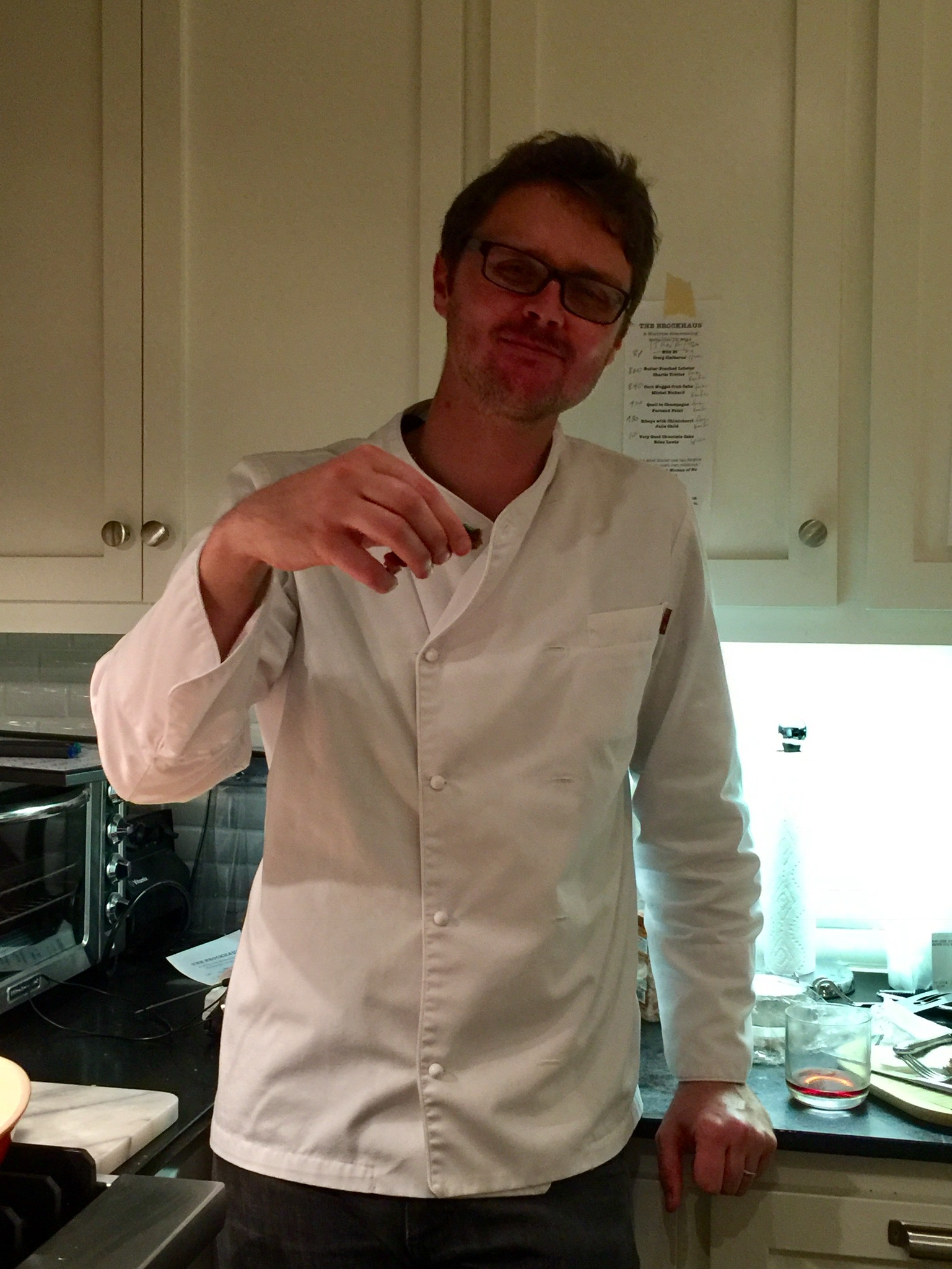
[dropcap]T[/dropcap]he lobsters had been prepped, the dessert (ginger ice cream and Edna Lewis’s Very Good Chocolate Cake) was ready, and Chris and I were discussing plating. It was Saturday, November 12, and The Brockhaus was making another appearance in Montrose, cooking in the house where its Houston chapter began, back in September 2014. At 3 p.m., and all was well. It turned out to be a homecoming worth savoring.

The Brockhaus

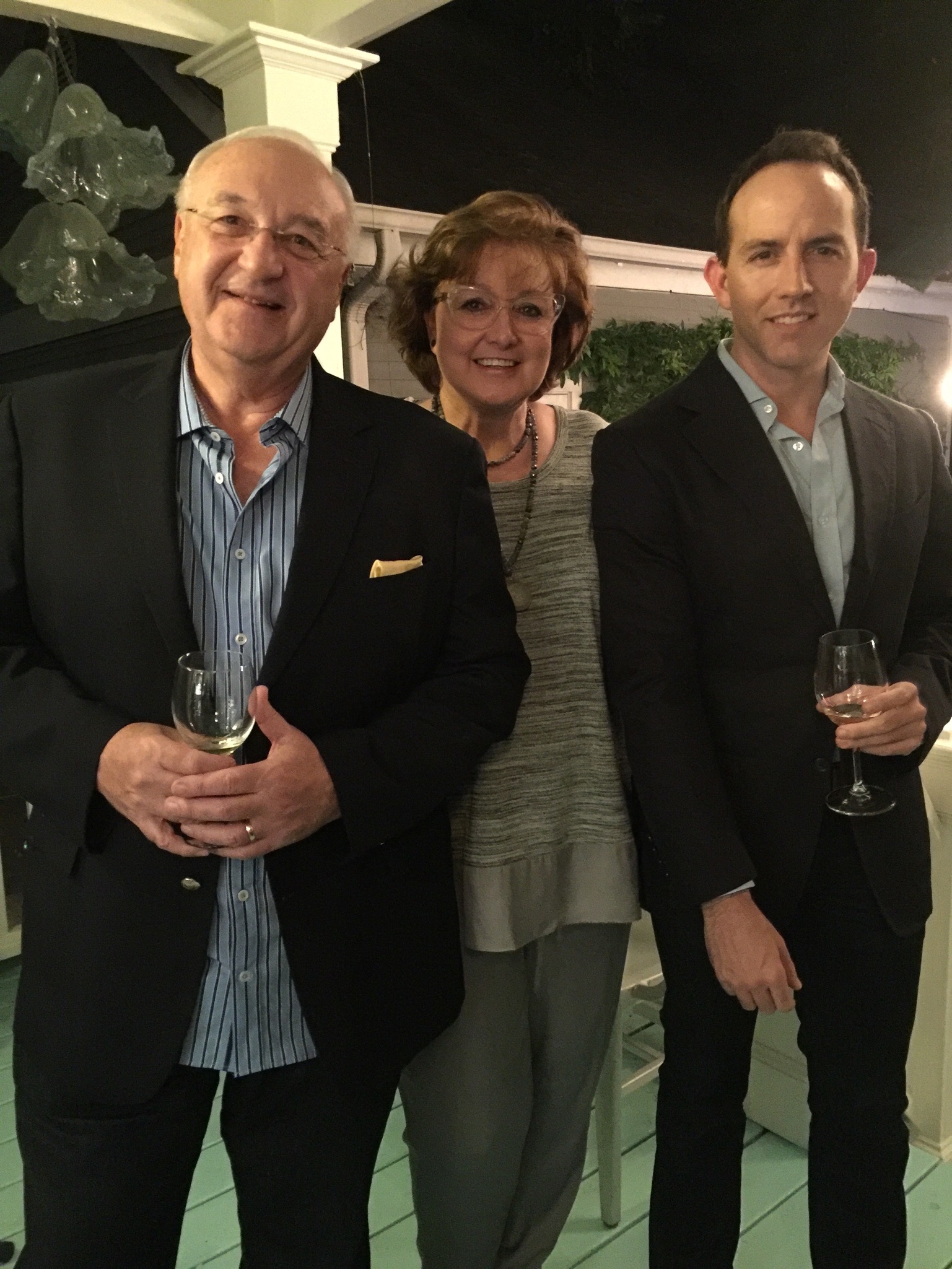
The guests would arrive at 7, and we’d serve them some Champagne and a chance to chat before dinner. (Judy and Russ and hosts Jared and Caroline were Brockhaus veterans, but the other attendees were new to us, and one another.) The porch overlooking the pool was the perfect spot for mingling.

The Brockhaus

Norma and Gary and Melanie — our team for the evening, from The Culinary Institute LeNôtre — were on the way. (Their work was instrumental to the evening; a kitchen is only as good as its team … there’s no room for deadwood, something that was drilled into me at Amador and Arzak.) Chris and I went over the schedule one final time, divided the tasks, and continued prepping, I taking care of the crab cakes, Chris dealing with the Billi Bi components. Angela entered the scene and began her planning.

The hours — as they always do — flew by, and the evening progressed. The guests talked and drank, the kitchen ran smoothly, and the plating and service hummed. The conversation emanating from the table flowed, the wines (selected by Jeremy Hart, of Banville Wine Merchants) pleased. All was as it should be in that bungalow in Montrose. The courses went out on time — the lobster and ribeye were highlights — and 11:30 arrived without a hitch. Quail, crab cakes, tuna, ginger ice cream … we thank our guests and partners, including Chantal, whose products we love to use.

Until next time, here are some images of The Brockhaus Montrose Homecoming (November 12, 2016):

img_0023

img_0004

img_1980 img_1977 img_0967 img_0958 img_0005 img_0009
img_0021 img_0020 img_0019 img_0956 img_0026 img_0025 img_0024 img_0018 img_0017 img_0015

img_0007
img_0013

img_0014

img_9091 img_9082 img_9071 img_9066 img_9060

Guy Stout’s Wine Classes Are Back: Four Nights, Lots of Bottles and Learning

[dropcap]I[/dropcap] am a fortunate man, for many reasons. Being able to call Guy Stout a friend is one of them. He’s a true character, a larger-than-life, Texas-born-and-bred original. I’ve learned a lot from him, and look forward to learning more. We’ve shared a table on numerous occasions, and opened a good number of bottles. It’s like a moveable feast, one always full of great stories and food.

A man of wine. (Photo by Alfonso Cevola)

A man of wine. (Photo by Alfonso Cevola)

If you like wine, and want to know more about it, your chance is now, because Stout’s Wine School is back. Beginning on Nov. 7, he’ll introduce you to the world of oenology, delving into the New World and the Old World, the basic and the esoteric. Don’t miss these four evenings. Click here for all the details, and get ready to be schooled.

(Read this for Stout’s Wine Talk.)

Nantucket Eats: Pork Belly, Duck, and Lamb at Oran Mor Bistro

The wedding is over, the guests have all left the island. Angela and I remain, enjoying the warm breezes blowing on Nantucket from the Atlantic (the temperature reached 69 Fahrenheit yesterday). Abundant sun, cool evenings, walks on cobblestone streets. The season is over, many shops are in the process of closing, and quiet calmness is everywhere.

We have devoted a portion of our evenings to restaurants, with mixed results. Several nights ago we went to Oran Mor Bistro & Bar, a small place on the second floor of a building a short walk from the house in which we are staying. I’d read a review of Oran Mar in The New York Times, and a few people who had dined there told me they had enjoyed the food. (I phoned the restaurant during the day to ask about its corkage policy. A woman’s voice on the other end of the line replied: “We do not have a corkage fee because we have a wine list. I hope you will be able to find something you like on our extensive list.”)

We did find something on the list, a 2012 Laetitia Estate Pinot Noir, which we ordered after being led past a small bar to our table in the corner of restaurant’s front dining room. The interior space is warm, earth tones on the wall, low ceiling. (I could imagine Thomas Jefferson sitting at the table next to us, wine glass at the ready.)

A wine we drank with pork belly, duck, mushroom ravioli, and lamb.

A wine we drank with pork belly, duck, mushroom ravioli, and lamb.

Our waitress, whose voice I recognized as belonging to the woman who informed me of Oran Mor’s (non)-corkage policy on the phone earlier that day, displayed a perfunctory manner throughout the evening, smiling in what seemed a forced manner whenever she approached our table and declining to reply “You are welcome” when I thanked her for pouring the wine. All of which would have been fine if we had ended the meal after our very good first courses.

Shiitake mushroom ravioli, with squash and parmesan broth

Shiitake mushroom ravioli, with squash and parmesan broth

Smoked pork belly, radish, egg

Smoked pork belly, radish, egg

The smoked pork belly was some of the best I have had, at least since moving to Houston in 2013. The meat was cooked well, and retained a moistness that is often lacking in pork belly. The fatty parts were excellent, as well: they melted in my mouth with a pleasing flavor. The broth was a touch too sweet for me, but the radishes were crisp and a welcome addition to the plate. The ravioli was easily the best thing of the evening. Fresh, strong-tasting mushrooms, rich parmesan broth, and delicate fennel. The pasta was thin yet firm, and each flavor component of the dish melded agreeably.

We were in no hurry on that evening – unless it is absolutely necessary I firmly believe that one should never rush while dining – and several times had to tell a server that, no, we were not finished “working on” our plates. Oran Mor is not an inexpensive place – our bill before tip was $182 – and the service should better represent the niche the restaurant occupies.

While we waited for our main courses we talked about the wedding and the weather on Nantucket and the utilitarian beauty of the Cape Cod architectural style. Our experience at Oran Mor soon took an unfortunate turn.

Hard potatoes, passable duck (save the lackluster confit).

Hard potatoes, passable duck (save the lackluster confit).

I ordered the Pekin duck – breast and confit, sweet potato purée, Brussels sprouts, huckleberry compote – and Angela decided on the lamb. (She was attracted to the Kalamata olives and tomatoes, but, we later discovered, there was perhaps all of one olive in the dish, minced.) Again, if our meal had ended after the first course we would have been incredibly happy. Instead, I was served hard potatoes, bland Brussels sprouts, and dry confit. Yes, dry confit. Angela’s lamb was satisfactory, medium-rare, lacking salt. And those olives were nowhere to be found. I must state that my duck breast was good, but it was not enough to salvage the overall lack of attention to technique and flavor.

Dessert was Elvis’ Doughnuts, and if they had all been at least warm, we would have loved them. Banana cream, chocolate, and fried dough, but two of the doughnuts were warm.

Oran Mor is attractive, and, judging by our ravioli and pork belly, can put out good food. I will reserve a final verdict until after my next visit.

Amazing! The Best! Oh My God! (A Reality Check for Houston Diners)

[dropcap]E[/dropcap]very day I am treated to another tweet or Facebook post proclaiming that the latest restaurant to open here in Houston is the “best in the city” or “to die for”. (I know no one who has been to each and every restaurant in Houston, so I am confident that anyone proclaiming “best” as applied to a restaurant is at best engaging in hyperbole, and at worst being naive.)

In the past month or so alone I have read at least 40 brief or not-so-brief accolades about Pax Americana and Museum Park Cafe, and while I understand that it is natural to wish nothing but success to restaurant teams opening new places, I often wonder if such glowing reviews about service and dishes/menu items do not serve detrimental purposes. If so many people are telling you that you are “awesome” and “amazing” and “perfect” you would be forgiven by most for believing that all is indeed perfect. But in my experience that is rarely the case, especially if your restaurant opened for full service the very week those accolades came streaming in. Too often I have wanted to believe that so many people cannot be wrong, only to take a seat at the “restaurant cooking the best food in Houston right now” and be, at best, disappointed with the food or service or, lamentably, both. (And I firmly state that both are necessary for a restaurant to be lauded as “awesome”.)

Take, for example, my experience this week. Ms. V – with whom I dine often, and whose palate I trust – invited me to Museum Park Cafe for dinner. The week before, she had dined there and liked the food. I accepted her kind offer and we drove to the Museum District about 7 o’clock, planning to enjoy some wine at the bar and check out the service.

I like the interior space. It is likely that the restaurant was designed to resemble a cafe or restaurant in a museum; in any event, it does. And the look works. Pale walls, art on one large wall, some wine bottles in modern racks toward the rear of the dining room, simple tables, no linens on them. Ms V and I ordered a Banshee Pinot Noir, and it was good. But the pouring of the wine is where the “awesomeness” began to suffer. The young man behind the bar, who told us he was the bartender, eager to take us off the hands of the waiter who escorted us to the bar and was doing a fine job, opened the bottle and hastily poured at least 6 ounces into Ms. V’s glass, evidently not wanting to let us approve of the wine. My dining companion firmly but politely told him “I want to taste it first.” He looked surprised, but allowed his guest to do just that. She liked the wine, as did I, and we continued discussing the Houston restaurant scene and mushroom hunting and the beauty of Alsace.

Biscuits at the bar turned out to be a pleasant experience.

Biscuits at the bar turned out to be a pleasant experience.

We were both a bit hungry, so Ms. V ordered (as written on the menu) Cheddar & Scallion Biscuits salumi caramel, a side dish that turned out to be, excepting the dessert, the best taste of the evening. The biscuits were warm, and light yet rich, the pork imparting a good touch of saltiness and the drizzled caramel providing a good mouthfeel and deep tone.

After we had our fill of the biscuits we decided to move to a table and order. We told the bartender that we would like to continue our meal in the dining room proper and he responded by saying “You’ll have to cash out first.” We responded by asking if it was possible for us to transfer the wine bill to our table, and politely requested that he ask the manager. He walked away and returned within 30 seconds, the check for the bottle in a tray, which he placed in front of us, all the while mute as a sleeping panda bear. Had he asked his manager? We never found out. Ms. V paid the bill and we proceeded to get down off of the high stools and make our way to a table. As our feet reached the floor bartender asked, nonchalantly, “Do you want me to take your bottle and glasses to your table?” I looked at Ms. V, on whose face was a fairly tight grimace. I knew what she was thinking, because I was thinking the same thing: What kind of service training did this bartender undergo? Who failed to teach him the basics? This was far from “awesome”. I picked up the two glasses and Ms. V handled the bottle and we took our seats.

Bone marrow, salad of parsley, dill, and onions (among other things) and some fairly useless shallot confit.

Bone marrow, salad of parsley, dill, and onions (among other things) and some fairly useless shallot confit.

Do not misunderstand me, for I mean no disrespect to the bartender. I am willing to understand and accept that he is more than likely a perfectly fine person. Yes, his attitude and behavior made our meal less than it could have been, but that did not make him a failure in our eyes. (I will also readily admit that Ms. V and I notice things in restaurants that many others seem not to. That does not make others unobservant, nor does it make us snobs. If one works in a good restaurant and does not notice things such as these one is not doing one’s job properly.)

We continued with our wine, and ordered more food. Let me state here that I am well aware that Museum Park Cafe is newly opened, and that kinks are surely being ironed out in the kitchen. I want this restaurant to succeed, because I can tell already that its approach and aesthetic are a welcome addition to the Houston restaurant world. My thoughts on our dishes are tempered by that newness. I will return, and I think the food will have improved by then.

Ms. V chose Steak Tartare french dressing, preserved egg, herb salad, gribiche for her first course, and I opted for the Roasted Bone Marrow shallot confit, oxtail marmalade, brioche. Then she decided to proceed with Swordfish, while I went for the Atlantic Scallops pork belly, corn pudding, charred onions, chanterelle.

Someone I know lauded the bone marrow at Museum Park Cafe, so I ordered it. Marrow is, as well, one of my favorite things; I have enjoyed great renditions of it at St. John in London and Le Pigeon in Portland. I was disappointed in this dish. The marrow was lacking that gelatinous look and reality that makes the food so good. The bread crumb topping was thin and bland, and not needed. Salt was also lacking, so I asked for some and sprinkled it liberally over the bones. It helped, but could not totally redeem things. On the other hand, the salad on the plate: onions, parsley, cilantro, dill. It was a great thing, the best element there. (I will not say much about the shallot confit. To my palate, it was best left off of the plate. No acid, mushy, almost as if it was meant to be food for babes.)

Fresh Atlantic scallops, lacking sear but promising.

Fresh Atlantic scallops, seared unevenly, but promising. And the dill did not work.

The tartare was very good. Whoever prepared it did so with great technique. Uniform pieces of meat, sauce mixed well, and the salad that accompanied the tartare was balanced and crisp. To the swordfish: I took a bite and immediately thought “sausage”. In fact, the dish reminded me of choucroute, which is not a bad thing at all. But if one wanted echt, proper swordfish, this dish was not for them. What seemed to be leeks in a sauce accompanied the steak. Something approaching a crust was seared on the steak, a crust that stated loudly: sausage.

My scallops were fine. The dish was plated in an attractive manner, the scallops were handled with care, and the corn pudding – if that is what it was – was tasty. I did not taste corn, and did not see corn. I wrote that the scallops were handled well, and by that I mean they were seasoned properly and not overcooked. However, they were cooked inconsistently; a portion of one had a good sear, while the remainder of the scallops were lacking the taste and feel that good searing imparts. And I would recommend no dill be put on the plate. Finally, the chanterelles, those glorious mushrooms, were soggy. I don’t know if they had been seared first, if they had been waterlogged when they were cleaned, but I thought it a shame to prepare chanterelles in that manner.

Honey. Semifreddo. No need for anything else. A perfect dessert.

Honey. Semifreddo. No need for anything else. A perfect dessert.

Dessert was all that remained. And it was good, and attractive. In fact, I say that it approached perfection. Textures, the right level of sweetness. All there. Semifreddo, a meringue, some pumpkin. It was something that no one would quibble with, and if it is on the menu when I return to Museum Park Cafe it will be ordered.

Now, about that bartender. I have it on record from a well-placed source that Museum Park Cafe is serious about service. I am confident that the young man’s approach to his job will be 180 degrees different on my next visit. Museum Park Cafe, I am certain, wants to take its service to a top level, and it should, and then, with a few tweaks, it could be “awesome.” Unfortunately, this was my first time at the restaurant, and as we all know, first impressions mean a lot. I was seated with my back to the kitchen, which gave me a view of the bar, behind which throughout our meal the bartender stood leaning against the counter, cupping something – peanuts? – in his closed hand and regularly lifting his head back to deposit the snack into his mouth. It was not a pretty picture, and he kept it up for a good 30 minutes. (One, never lean against things in sight of guests. There is always work to be done in a restaurant. And two, I think it best to refrain from snacking in such an obvious manner, as if one is a cow chewing its cud. Yes, I told you already, I have had high standards drilled into me where service and behavior is concerned.) The two waiters we dealt with were performing their duties as they should have. It seems the young bartender is the outlier here.

Museum Park Cafe should be on your list of places to visit. Sit at the bar and have some wine. Order the tartare and brioche toast. Admire the design of the place. And let me know what you thought of the service.

Update: I dined one more time at Museum Park Cafe before it closed (the restaurant became a thing of the past in April 2015). I ordered the bone marrow again, and this time a marrow spoon was required, as the bones were very narrow. Alas, the restaurant had none. I turned my fork sideways and pulled out a bit of the marrow, tasted it, and pushed the plate away. Same bland bread crumbs, dry marrow, hardly any flavor.

What I’m Drinking Now (And It Takes Me Back to Paris)

Made in California, but it took me to France. (Brockhaus Photo)

Made in California, but it took me to France. (Brockhaus Photo)

Every now and then I come across a wine that transports me, that at first taste takes me to a place I want to be. It happened a few evenings ago, and I have Vanessa Treviño-Boyd to thank for the brief excursion of the mind and spirit. I was sitting at the bar at 60 Degrees Mastercrafted, where Treviño-Boyd is the beverage director and sommelier, and she brought me a bottle of Lieu Dit, a 2013 Melon. The producer describes it this way:

From old vines planted in the early 70’s, this block grows on sandy soils in an exceptionally breezy part of Santa Maria Valley out at Bien Nacido vineyard. The fruit is pressed, fermented, and aged all in tank to ensure the minerality, freshness, and tension we look for when enjoying this variety.

It was crisp, balanced, and drinking it took me back to a little restaurant in the Fifth Arrondissement, at the top of Rue de la Montagne-Sainte-Geneviève, the street on which I lived. Several mornings each week a man would bring oysters he harvested to the restaurant, and I would go there and eat them as I stood on the sidewalk. If he was extremely busy, which he often was, I would shuck the oysters from Brittany at a small table outside the door of the restaurant, gathering a dozen or so on a plate before I ventured to begin my breakfast. With the briny wonders I drank, always, a wine that was from the Loire. I thought often of Hemingway, who had many times walked on that same sidewalk. Those mornings were beautiful. It was late fall, winter was coming on, and all was good with the world, at least on that small stretch of land in Paris.

I will be buying the Lieu Dit melon, a Brockhaus-approved wine, by the case, if I can find that much.

My Love For Riesling (and Olivia Newton-John) Knows No Bounds

Magic in a bottle.

Magic in a bottle.

Anyone who knows me well knows I am all about Riesling. I love the grape, I love the wines. I study them, I collect them, I drink them, I dream about them. I “grew up” in the Rheinland-Pfalz, a beautiful area out of which comes some great wines, and I still recall the first time I tasted a Riesling: It was 1980, and it was a Bassermann-Jordan, and it was delicious. My life changed then and there. I saw that magic could be bottled and opened later for one’s enjoyment. (Angela and I visited Weingut Geheimer Rat Dr. von Bassermann-Jordan in 2012, along with a number of other wineries in the area. And we’ll be back.)

God's country, and home to some outstanding Rieslings. (Photo courtesy Germany.travel.com)

God’s country, and home to some outstanding Rieslings. (Photo courtesy Germany.travel.com)

The next day I went to the bookstore near my American high school and bought a copy of Frank J. Prial’s “Wine Talk” and began reading it immediately. I read anything about wine I could get my hands on, which was mostly in the International Herald Tribune (I was an editor on the staff of my school’s newspaper, and Ms. Thompson subscribed to the IHT for her journalism students).

My first wine book.

My first wine book.

Not long after that first taste my parents returned to the U.S. for a brief visit and I was left alone for a week or so. I don’t remember exactly where I bought my first collection of wines, but I clearly recall coming up with the plan to open a bottle each evening – I was at the time reading F. Scott Fitzgerald’s books in the order they were published, and the Rieslings surely added quality to that experience.

A friend who was around my age who lived upstairs from my family also liked wine, so he and I decided to start traveling to a village or town each week to enjoy a lunch or dinner and some wines. We went to Trier, and Mannheim, and many places in between. We ate bockwurst and schnitzel and escargot and saumagen. We drank mostly Rieslings, with some great beers thrown in for good measure. One meal I will always remember was one of trout caught from the waters below our table. It was at Seehaus Forelle, and it was more than 30 years ago, but it will be in my mind forever. The fish and the potatoes and the cucumber salad. And the wine. Riesling, of course.

Hopelessly devoted to you.

Hopelessly devoted to you.

Venus in fur.

Venus in fur.

That is how my passion for Riesling was born. But where, you ask, does Olivia Newton-John come in? Well, like any red-blooded male at that time I had a monumental crush on the Grease star. I loved the film, liked her songs, (though I was soon to discover the joys of Elvis Costello and U2 and the Police and BAP and leave her type of music behind), and admit to fantasizing about her from time to time. Or more often.

Yesterday I saw a video made by the Camerata crew, which transported me back to those days in Germany and made me think of Olivia and my first taste of Riesling. Watch this short, one of the best things I have ever seen made about my beloved grape, and perhaps you will understand what I am talking about. And whatever you do, drink more Riesling. It’s better than greased lightning.


Beauties from the Loire: The Wines of Saget la Perrière

A man and his wines: Arnaud Saget has taken his place in1 the ninth generation of a family-run winery.

A man and his wines: Arnaud Saget has taken his place in the ninth generation of a family-run wine-making concern. (photos/James Brock)

I have spent some time in the Loire Valley, and love drinking wines from the large region. It is a place full of lively and interesting winemakers, not to mention châteaux, and if you’ve never had the pleasure of driving from Paris and visiting Chambord or Château d’Azay-le-Rideau and drinking wines from Olivier Cousin in a café around the corner from where they were bottled, you should consider booking a flight to France. It is a magical region, the Loire. (And if it was good enough for Leonardo da Vinci, it is certainly good enough for the rest of us.)

The Loire produces some of my favorite daily drinking wines, and yesterday I had the opportunity to meet Arnaud Saget, whose family owns Saget la Perrière and produces wine with 890 acres and six estates. A tasting lunch at The Oceanaire Seafood Room was the setting, and it’s been a long time since I enjoyed, at one seating, so many exemplary, easy-drinking wines that I would serve, without reservation, on a daily basis.

Saget is the director général of his family’s company and is charge of marketing, so he travels a lot; this weekend he will be in New York, and next week Germany. His enthusiasm for winemaking is infectious, and though he understands that wine (and the selling of it) is a business, it is evident that he also understands and respects that his calling is part of a long and hallowed tradition that brings joy to the lives of millions of people around the world.

We began with the Muscadet de Sèvre & Maine sur Lie Les Cilssages d’Or, and it was the ideal way to start a meal focused on seafood. I liked that this wine was not overly sweet, and the hints of peach and pear were refreshing.

Bottles of 2012 selections from Saget la Perrière command one's attention.

Bottles of 2012 selections from Saget la Perrière command one’s attention.

We had more wines than food courses, but that was no problem. All of the selections were from 2012, and, as I wrote, are drinking well right now. My favorite was the Domaine de la Perrière Sancerre. Crisp, it made me think of a Riesling, and when Arnaud Saget told me that the grapes are grown in flinty soil I understood why I thought “Riesling”. This Sancerre would be perfect for an afternoon under a beach umbrella, or with oysters. Or both at the same time.

We tasted two reds at lunch, a Chinon and a Pinot Noir. The latter was unmistakably a pinot. Ruby color, faint, lovely vanilla taste, easy on the tongue. The Chinon, however, would be my preferred of the two reds, with its supple tannins and wonderful spiciness.

Yes, there was food. We were served an Alaska Red King Crab Salad as a first course, followed by Pan-Broiled Alaska Weathervane Scallops – overcooked to my palate – Seared Wild Alaska Halbut, and, as a closer before the dessert, Grilled Bering Sea Wild Coho Salmon, which we paired with the Pinot Noir, and which was the best dish of the day. Its tarragon butter sauce was perfect, creamy, slightly acidic.

Wild Halibut from Alaska was firm, slightly briny, but overwhelmed  by the potatoes served with it.

Wild Halibut from Alaska was firm, slightly briny, but overwhelmed by the potatoes served with it.

Wild Coho Salmon, with a great tarragon butter sauce

Wild Coho Salmon, with a great tarragon butter sauce, was the best dish of the day.

If you are looking for wines to drink every day, bottles with great price points – the most expensive wine we tasted (the Le Domaine Saget Pouilly-Fumé) carries a suggested retail price of $29 – buying these Saget selections by the case would not disappoint.

WINES TASTED (suggested retail price US$):

Muscadet de Sèvre & Maine sur Lie Les Cilssages d’Or ($14)
Marie de Beauregard AOC Vouvray ($18)
Guy Saget La Petite Perrière Sauvignon Blanc ($12)
Guy Saget La Petite Perrière Sancerre ($22) *A Brockhaus Selection
Le Domaine Saget Pouilly-Fumé ($29)
Guy Saget La Petite Perrière Pinot Noir ($13.50)
Marie de Beauregard Chinon ($17.99) *A Brockhaus Selection

« Older posts Newer posts »

© 2026 Mise en Place

Theme by Anders Noren — Up ↑