Debra Mathy is the owner of Dutcher Crossing Winery, a Dry Creek Valley estate that she purchased in 2007. A trip to France during high school, one that involved visits to a number of wineries, put an idea in her head: I want to one day make wine, and own a winery, she remembers telling her parents.
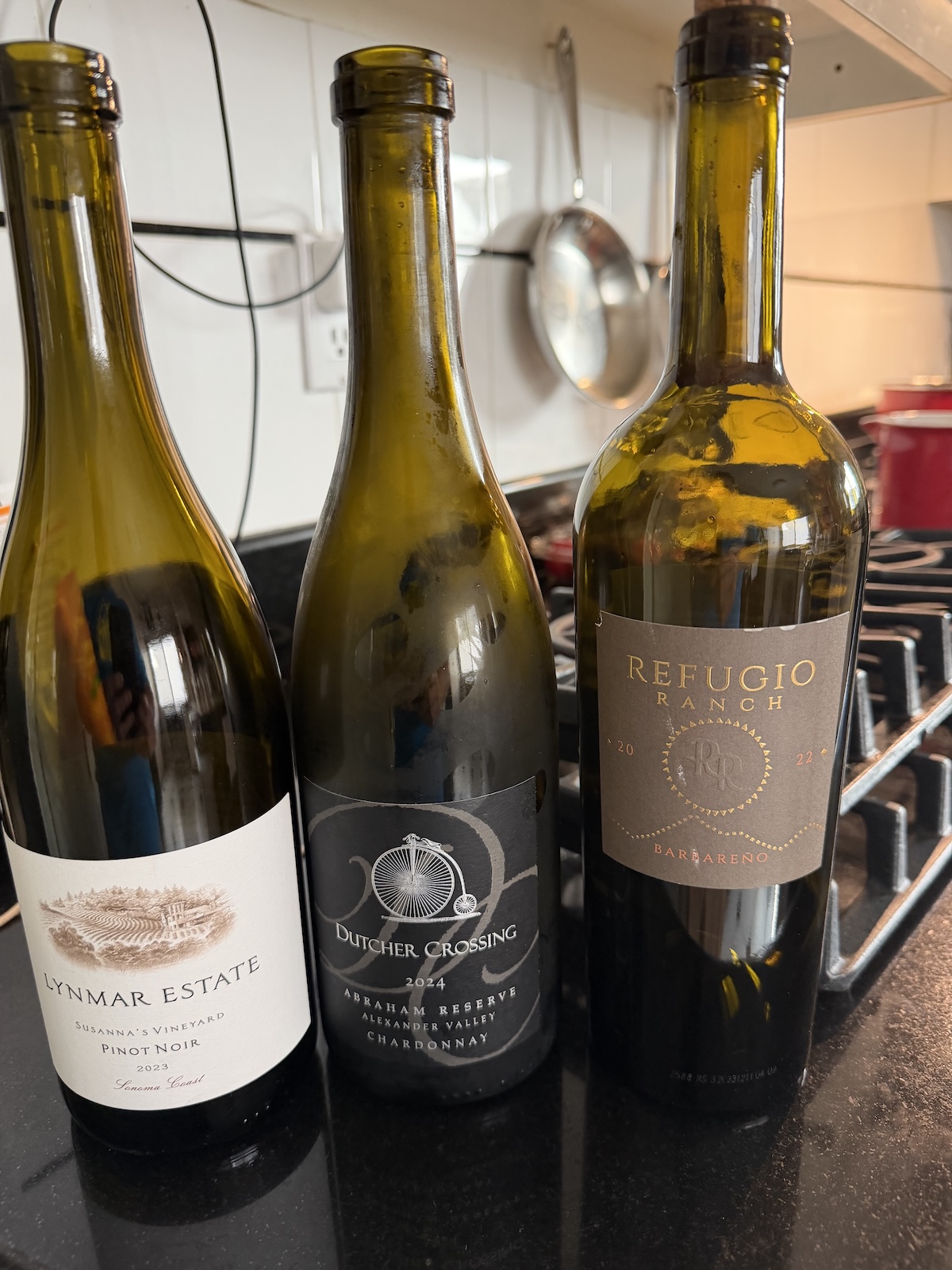
After a career in education, she made her dream come true. She purchased Dutcher Crossing and has been at the helm of the estate ever since. One of her wines is in this week’s Tasting Notes, which you can read here. You’ll also find bottles from Lynmar Estate and Refugio Ranch.
The estate is iconic. A stone winery constructed in 1888 by Alfred Lovering Tubbs is its centerpiece. Tubbs hired a French architect, who used French stonemasons and imported stones to create the A.L. Tubbs Winery. Spending a few hours there is something I recommend.
This building was added to the U.S. National Register of Historic Places in 2013. (Chateau Montelena)
The estate, located in Calistoga, California, is now known as Chateau Montelena, and Matthew Crafton, the latest Wine Talk subject, is its president and winemaker. He’s been with the estate since 2008, and his guidance and vision are worthy of attention. Click here to read what Crafton has to say about the future of the wine industry, where he likes to drink a glass of wine when he’s not working, and other things.
Matthew Crafton has a degree in economics but found his love and passion in the wine world. (Chateau Montelena)
There’s something to be said for a winemaker’s long tenure at one estate. It would be a fine thing to, season after season, become one with a vineyard, with its vines and insects and rows and birds and microclimates. Don Schroeder, the winemaker at Sea Smoke, has been at the estate since 2003, and he knows every square inch of it.
I met Schroeder recently in Los Angeles at a Sea Smoke lunch tasting. The wines were very good, and I enjoyed speaking with him about his experiences in Alaska (we both once lived there), his education, his family, and his enthusiasm for Alsace, which I share. We also, of course, talked about the wines he makes.
Schroeder is the subject of the latest “Wine Talk,” which you can read here.
The Sea Smoke Estate shares an intimate relationship with the Pacific Ocean. (Courtesy Sea Smoke)
Evan White is the star of the latest “Wine Talk,” and he got his start in the hospitality industry at one of my favorite restaurants in Manhattan. That would be Babbo.
White now resides in Houston, Texas, and he’s the wine director for the Bludorn Hospitality Group, for he which oversees a number of wine lists and beverage programs. I liked hearing his take on problematic customers, and share his enthusiasm about pairing wines with Vietnamese cuisine. Wait until you hear what he says is the best cabernet sauvignon made in the United States.
Bludorn occupies one of my favorite spaces in Houston. (Julie Soefer photo)
The latest “Wine Talk” is here, and this one is heavy on pinot noir. Specifically, pinot noir from California. Adam Lee, of Siduri fame, opens up about his journey from Austin, Texas, to making wine with his former wife, Dianne Novy, in California, to founding his current main project, Clarice Wine Company.
Along the way Lee debated alcohol levels with Rajat Parr, surprised Robert Parker with some wine left with Meadowood’s concierge, and made myriad outstanding wines. He’s still making them.
I enjoyed speaking with Lee, and his background and story are fascinating. He majored in French History, knows a lot about the French penal system, and has managed to maintain a passion and enthusiasm for wine for decades now. That’s a good thing.
A red wine from Paso Robles was on my sampling agenda this week, and it’s an easy-drinking blend of cabernet sauvignon (45 percent), primitivo (25 percent), petite sirah, Malbec, and pinot noir (all 10 percent).
The 2023 Highlands 41 Black Granite Red Blend carries a $15 suggested retail price, and it’s a great value for the money. Fruit comes from the Creston Highlands and Riboli Creston vineyards (both in the Creston District AVA). Highlands 41 is owned by Riboli Family Wines. (Buy it here, or find it near you using this.)
Pair this red blend with meatloaf, hamburgers, or grilled lamb chops.
Highlands 41 also makes a Paso Robles cabernet sauvignon and a pinot noir and chardonnay, both from Monterey County. Estate vineyards in Paso and Monterey are certified sustainable by the California Sustainable Winegrowing Alliance. The 2022 Black Granite was named by Wine Enthusiast as 2022’s top “Best Buy.”
Blackberry and raspberry dominate on the nose and the palate, along with vanilla, plum, and a touch of bramble. Tannins are medium. The winemakers used 10 percent new American oak barrels, 10 percent new French oak, and 80 percent neutral barrels. The blend was aged for 10 months, and alcohol rests at 13.9 percent.
The Riboli Creston Vineyard spans 320 acres in Paso Robles.
Pairings? I had a glass of this wine with a slice of pepperoni pizza, and it was a good marriage. This wine would be a great fit for your next casual gathering that features beef barbecue or grilled sausages, and pizza parties would also be an excellent idea.
Thanksgiving is the food holiday, at least in my family’s culinary tradition. My maternal grandmother made the best stuffing I’ve ever tasted, and while her Christmas fruitcakes and mincemeat pies are the stuff of legend, we always privileged Thanksgiving when it came to family holiday feasts.
I was not drinking wine as a child at those gatherings at my grandparents’ house in Savannah, but now I can’t imagine sitting down at the table on the last Thursday of November unless a few bottles are in the mix, wines selected for an occasion that likely features turkey, cranberries made your way (I like mine a bit spicy), potatoes or squash, perhaps sautéed green beans … you fill in the blank, of course, depending on your traditions. I have made shrimp as an appetizer for Thanksgiving, and last year at a Friendsgiving meal my contribution was a green chile pork stew.
Choosing the right wines to serve with your Thanksgiving feast is not rocket science. (Circe Denyer)
So, based on general American habits concerning Thanksgiving foods, and with some flexibility added for regional or familial variations, which wines should be on your menu come November?
Word to the wise: Champagne or other sparkling wines are a must, and I will accept no debate here. You cannot go wrong selecting several bottles from this diverse category. Offer guests a glass of cava as they cross your threshold, and consider serving gougères with that Spanish treasure (I like this recipe from David Lebovitz). For the table, and if you are serving turkey, feel free to indulge your Champagne obsession and knowledge. Pair the main course with a vintage brut, and with your desserts (pumpkin pie, pecan pie, a sweet casserole) serve a demi-sec. You can also opt for a Sauternes or a Trockenbeerenauslese with your sweet dishes.
Cava is a Spanish treasure, and it’s a great addition to the Thanksgiving table. (Marcelo Verfe)
Unless you are going extremely non-traditional and plan to serve steak, avoid Cabernet Sauvignon and anything blended with that grape (and anything with robust tannins). Turkey, mashed potatoes, and your squash casserole will hate sharing the stage with with those otherwise fine wines. I’m sure you drink a lot of big Napa reds on a regular basis, so missing one day won’t damage your psyche. If you must open a bottle of your favorite big red, it would be advisable to make it something with age; softer tannins are a better fit with the lower fat level of turkey.
Chardonnay is a common refrain around this time of year, and chablis definitely has a place on your menu. Fruity and crisp, plus graced with wonderful acidity, these wines will pair well with your turkey. If you want something with a bit more oak, feel free to go that way. Better yet, serve both types and provide your guests’ palates with a chance to compare and contrast.
Two Perennial Wines I’ll now proffer two names that have featured at my Thanksgiving table for years and years. I’m referring to Pinot Noir and Beaujolais. The tannins generally found in a good Pinot are of the softer variety, and a medium body will suit your turkey well. Cherry and mushroom notes, plus vibrant acidity, are magic at Thanksgiving. You can’t go wrong with something from Burgundy, and Oregon is another stellar source.
Beaujolais is an easy and popular choice for Thanksgiving, and gamay’s mid-level alcohol and superb fruit profile combine to great effect at the holiday table. I served a Morgon at my inaugural Thanksgiving gathering, a decision that began my love affair with this wine.
I’ll add here — and this applies to all of your wine selections for the holiday — that it’s a good idea to sample every wine you plan to serve before you make your final decisions. Consider your palate, and the palates of your guests, as well as your particular menu, especially if your food lineup wanders off from the traditional.
Riesling is a wine that gets along well with Thanksgiving.
And now to Riesling, my liebling grape. I love to make a savory gravy from the drippings of my turkey, and the high acidity of this grape makes my mouth water, literally when eating it and when I merely think of this combination. I am also a dark meat guy, and, again, that acidity cuts through the fat and richness of a turkey leg and stuffing made from the gizzards, heart, and liver. Buy a few dry and off-fry versions of Riesling and sample them, based on your menu.
The Guests are the Stars No matter what you serve with your Thanksgiving feast, don’t stress. I’ve given you some tried-and-true options, but do not feel hemmed in by my guide, except for that Cabernet Sauvignon advice. In addition, there’s no need to be a wine snob on this special Thursday. Sure, you might want to impress your guests with your taste and knowledge, but the wines aren’t the star here, and neither are you. Your grandmother might prefer a Chardonnay rich with oak, or uncle Joe’s love could be White Zinfandel. What better way to show them you care than putting “their” bottles at their places at the table for their sole consumption, a gesture that need not interfere with the rest of your wines?
A meal in Malibu: Joan Didion, her daughter, Quintana Roo, and husband, John Gregory Dunne. (Henry Clarke/Condé Nast/Shutterstock)
To close, I urge you to read this piece, which was published today in The New York Times; it is a beautiful story about Joan Didion’s love for Thanksgiving dinner. The author, who passed away in 2021, was a thoughtful cook, and she planned meticulous holiday dinners. From Patrick Farrell’s article: “It has always seemed like such an awful holiday,” a friend wrote her after one dinner, “but you made it something quite wonderful.”
Leave a comment and let me know what you’ll be pouring on Thanksgiving.
The annual World of Pinot Noir extravaganza is a great event to attend; I was there this year for the first time, and look forward to the 2026 edition. More than 200 Pinot producers poured their wines and the seminars, lunches, and dinners were thoughtful and informative.
Alma Rosa winemaker Samra Morris, right, at this year’s World of Pinot Noir in Santa Barbara with Angela Shah and me.
As an appetizer to the main event, Wally’s Presents: WOPN LA is taking place on Oct. 25, and if you like Pinot Noir now is the time to get your tickets (purchase here). The Pacific Design Center is the venue, and from 2 p.m. until 5:30 p.m. you can taste wines from Alma Rosa, Calera, Bien Nacido, Dusty Nabor Wines, Kosta Browne, Presqu’ile Winery, and many other producers. Tickets are $125, and if you use promo code WOPN2025 you can save $50 if you buy two.
Dan Fredman pours Champagne at this year’s World of Pinot Noir.
Ciliegiolo. That’s an Italian word. It’s fun to pronounce. It’s fun to drink. And it leads this edition of Tasting Notes.
Ciliegiolo is a grape that originated in Italy, where it is found primarily, if not solely, in Tuscany, Lazio, Liguria, Puglia, and Umbria. The word translated into English means “small cherry;” its berries resemble that stone fruit and the wines made from them are redolent of cherries. It is not a variety that you are likely to have heard about on a regular basis, but those who know it are well aware of its value and importance. And since winemakers are paying more attention to it as a grape to shine on its own, as opposed to mainly blending it with Sangiovese to “soften” the latter’s profile, I hope this ancient grape will come to attract your attention on a more regular basis.
Ciliegiolo: An ancient grape with a disputed DNA. (Photo by Nick Belanger)
“In my view, Ciliegiolo is one of the most underappreciated grape varieties, allowing for wines of mesmerizingly pure aromas and flavors,” writes Ian D’Agata in “Native Wine Grapes of Italy” (2014), and I agree with him. (D’Agata’s book is one of my favorites on the subject, and if it is not in your library I urge you to acquire it, along with his more recent “Italy’s Native Wine Grape Terroirs.”)
Ciliegiolo’s parentage is the subject of ongoing debate. D’Agata included a compendium of DNA studies in his book that have been carried out on the variety, which was, according to the author, “most likely first described in the 1600s by Soderini, whose description of a Ciriegiuolo grapevine resembles the Ciliegiolo we know today.” D’Agata’s compendium is thorough and makes for fascinating study, and for readers who appreciate such things I recommend turning to page 248 of “Native Wine Grapes of Italy.” Suffice to say that researchers behind ongoing DNA analyses are sparring still as to the parentage and makeup of Ciliegiolo; is it a progeny of Sangiovese, or is it a natural cross of Sangiovese and Moscato Violetto? D’Agata concludes his say on the subject thusly: “Clearly, this is a matter that needs to be studied in more detail.”
I now embark on a brief journey into Giovan Vettorio Soderini, the Italian agronomist mentioned above, because I like history and biography and he had some influence on the craft of winemaking in Italy. Soderini, who was born in 1526 and died in 1596, was sentenced to beheading because of his protests against the Medici (he was born in Florence), but Ferdinando I de’Medici, Grand Duke of Tuscany, spared his life and banished him to Cedri, which today has a population of around 35 humans. Soderini had studied law and philosophy in Bologna, but turned his attention to agronomy following his banishment. Trattato della coltivazione delle viti, e del frutto che se ne puo cavare (“Treatise on the Cultivation of the Vineyard, and the Fruit That Can Be Obtained”) (Florence, Filippo Giunti, 1600) is according to many academicians his (posthumously published) masterwork, and copies of it can be purchased still today.
Back to Ciliegiolo, and a bottle of wine I sampled recently that leads this edition of “Tasting Notes.” It’s produced by Badia a Coltibuono and goes by the helpful name Chill Ya Jolo. It, too, is fun to pronounce, and I loved drinking it. It’s 100 percent Ciliegiolo, and sells for around $20. Yes, you should chill this wine well before drinking it.
Ciliegiolo: A grape that deserves wider recognition.
The 2024 Chill Ya Jolo was imminently approachable — I am looking forward to sampling the 2025 — and I tasted it after the bottle reached 65 degrees Fahrenheit. Winemaker Roberto Stucchi Prinetti, aided by consultant Maurizio Castelli, know what it means to put together a wine that makes you smile, and this one certainly does that. It comes with 12 percent alcohol, and 20,000 bottles were produced after aging in stainless steel.
Drink this with pizza, scallops, or a good hamburger.
Labels are made to attract the eye and impart information about the contents of a wine bottle. The ladybug (coccinella in Italian) on this one calls attention to Badia a Coltibuono’s approach to sustainable organic farming, and the Hesse quote is apt: Beauty is in the details.
Back to a little pertinent history now. Badia a Coltibuono — Abbey of the Good Harvest (or Cultivation) — was established in 1051 by Giovanni Gualberto (sainted in 1193 by Pope Celestine III), who founded the Benedictine Vallumbrosan order. It functioned as an abbey until 1810, when it was unable to withstand Napoleon’s assault on the Church. Michele Giuntini, a banker from Florence and ancestor of the current owners, the Stucchi Prinetti family, bought the property in 1846, and that began the estate’s journey to becoming a leader in the Chianti Classico universe.
This wine is liquid ruby; holding a glass to the light makes the Chill Ya Jolo even more inviting. The cherry aroma here is profound — it made me think of a time I had a particularly fresh basket of Lapins cherries and after rinsing sliced a few of them and caught their scent. A little heady, lots of vivacity.
I paired this wine with seared sea scallops; I put the Maillard reaction to good use and made sure that the scallops showed its effect, because that’s a mix of flavors you’ll remember for a long while. The wine’s brightness and lively fruit seemed made for the seafood, which was prepared with a briny vanilla cream sauce.
Chill Ya Jolo might be seen as a summer wine, but in my house wines similar to it are consumed around the year. No reason to put strictures on matters such as these.
The 2022 Nestweaver Sonoma Coast Pinot Noir is next, and it excited my senses for a good while following my initial taste. A subtle aroma blend of raspberry and sweet cherry put me in an expansive mood on the afternoon I sampled this wine, which was made by Patrick Nyeholt. A secondary note on the nose is dried mushroom, a scent that gives this wine a restrained wildness. Its garnet color in the glass promises what I discerned as seriousness.
Nestweaver Wines was launched in 2021 by Caren Frutig Hatton — you might know her as the co-founder of Arietta, which she established alongside her husband, Fritz Hatton, and John and Maggy Kongsgaard, in 1996. “Nestweaver represents the elegant, nuanced Pinot Noir I envisioned creating for over 20 years, and Patrick Nyeholt is the winemaker to bring my vision to fruition,” Frutig says.
Patrick Nyeholt, Caren Frutig Hatton, and Jeffrey Corpuel stand in the Corpuel Family Vineyard, located in California’s Sebastopol Hills. (Photo courtesy Nestweaver)
Some might question the wisdom of pricing the second vintage of a wine produced from purchased fruit at $125, but the market will have final say, as it almost always does. I will say that I have tasted a good number of wines sold at higher prices that satisfied me less than the Nestweaver did, and I’ll leave it at that.
The 2022 vintage — 14 percent alcohol, 122 cases produced, 100 percent Pinot Noir — saw 30 percent new French oak, and nine months of élevage resulted in something that is delicious now and worthy of aging; 140 cases were made. Frutig Hatton says her grandmother, who created a “loving sanctuary” for her family, was the inspiration for the wine, whose label was designed by Frutig Hatton’s daughter, Hattie.
Nestweaver represents the elegant, nuanced Pinot Noir I envisioned creating for over 20 years, and Patrick Nyeholt is the winemaker to bring my vision to fruition.
Nestweaver Wines founder Caren Fruitig Hatton
I find this a cerebral wine, and its soft tannins contribute an elegant touch. Fruit comes from the Corpuel Family Vineyard, a 7.6-acre Sebastopol Hills property planted to Pommard, Swan, and Vosne-Romanée clones by Ulises Valdez, who sadly passed away of a heart attack at the age of 49 in 2018.
Patrick Nyeholt is the head winemaker at Nestweaver, and serves as associate winemaker at Arietta.
I paired the Nestweaver Pinot Noir with a lamb chop seared simply with olive oil and rosemary; the wine gracefully melded with the protein’s gaminess, and the lamb elevated the wine’s midpalate. Nyeholt, who began working under Andy Erickson at Arietta in 2011 and was named head winemaker at Nestweaver in 2022, has produced an intriguing wine, one I hope to revisit soon.
I am a proponent of opening a bottle of sparkling wine as often as one can, be it Champagne, cava, or anything else bubbly and made well. Sharing a bottle with friends and family at the table is a ritual that can slow the pace of a hectic day, encouraging conversation and contemplation. Closing out this edition of Tasting Notes is a wine from Texas, the 2021 Heath Sparkling Wines Adoration. It has a suggested retail price of $61 — Heath club members can get it for $52 — and is a Pinot Noir-dominated blend: 77.2 percent of that sparkling mainstay, along with 17.2 percent Chardonnay, 3.8 percent Pinot Meunier, 1.5 percent Pinot Gris, and .3 percent Pinot Blanc.
Make a platter of spicy friend chicken and pair it with this sparkling rosé.
This sparkling rosé was sampled after being chilled to around 46 degrees Fahrenheit, a temperature that served it (and me) well. A beguiling pale coral hue invites one to sip and savor this wine, which smells of wild strawberry, Bing cherry, and rose petals, a balanced melange. In the mouth, red fruit flavors dominate, then a fine citrus blossom note comes along to finish the experience.
The Heath Adoration is classified as a Brut and has .75 percent residual sugar. It spent only 20 months on the lees, which likely explains the large, vigorous bubbles in the glass. The acidity here is impressive; I paired this bottle with a platter of fried chicken that I made with a slightly spicy batter, and the combination was nearly perfect.
Didier Chopin’s life has been a touch hectic during the past several years. The winemaker was sent to jail this week for 18 months after being found guilty of selling hundreds of thousands of bottles of fake Champagne — or should I write “champagne”? He’s also facing sexual assault charges. He was sentenced in a court in Reims. Fake bubbles are not cool.
It was, for a long while, my favorite restaurant in New York. Wedding anniversaries and birthdays were all celebrated there, and I never had a bad time at the Waverly Place Italian destination, no matter if dining at the bar (where on one evening I had a long and pleasant conversation with Jay McInerney), upstairs in the former hay loft, or at “my” table at the far end (on the right) of the downstairs dining room. Babbo was the place — is the place. I sadly had my first awful experience at the restaurant back in 2019, the last time I was there for dinner, so am looking forward to seeing how Mark Ladner transforms the place. He knows it and its creator, Mario Batali, quite well, after all. I hope the Mint Love Letters are on his menu.
A new owner and chef for an old favorite of mine. (Photo by Heath Brandon)
Jess Lander has written a downright dystopian article in the San Francisco Chronicle about the 2025 harvest in California. “Tens of thousands of acres of vineyards have been ripped out across the state, and despite mostly ideal weather conditions this growing season, more than 100,000 tons of California wine grapes will likely be left on the vines to rot — for the second consecutive year,” Lander writes. Brutal, indeed.
To continue in the less-than-good-news category, proposed federal legislation that seeks to bar states from regulating pesticides and insecticides is in danger of being passed into law. A provision in the legislation, section 453, prohibits the EPA and adjacent agencies from updating production warning labels from original conclusions under the 1947 Federal Insecticide, Fungicide, and Rodenticide Act. According to WineBusiness.com, in an article written by Michelle Williams, section 453 would “grant immunity to all foreign and domestic manufacturers” of these products for failure to “warn about product hazards.” It does appear to be as bad as it seems. Want more glyphosate and paraquat on your vines?
In better news, the Texas Wine Month Passport 2025 is available for purchase now. It gives you access to tastings, discounts, events, and other good things going on at more than 45 Texas Hill Country wineries from October 1 through October 31. A portion of the proceeds from passport sales goes toward the Texas Hill Country Wine Industry Scholarship Fund, so your pleasure will also help others.
There is, of course, more to this world than wine. Mise en Place, my site, is subtitled “Wine, Food, and Other Vital Things,” and literature and books are two of those vital things in my life. Henry Louis Gates Jr. has written a wonderful piece on Jamaica Kincaid’s work and life in the current issue of The New York Review of Books, and I recommend it wholeheartedly, whether you are familiar with Kincaid or not. Gardening, writing, Black literature, a moving, tempestuous relationship with a mother, and a woman whose early years in Manhattan have long enthralled me. Kincaid is the real thing, and has been for decades.
This week’s reading roster ends on a book, one that should, I strongly posit, be in the library of anyone who respects French wine, its history and place in the world, and its present and future. Get yourself a copy of Jon Bonné’s The New French Wineand revel in Chablis, Pinot Noir, insightful and moving profiles of producers and winemakers, and maps and impressions and opinions. It’s a great book, and will provide you with a lot of reading pleasure. You’ll learn some good things, too.




Recent Comments