Debra Mathy is the owner of Dutcher Crossing Winery, a Dry Creek Valley estate that she purchased in 2007. A trip to France during high school, one that involved visits to a number of wineries, put an idea in her head: I want to one day make wine, and own a winery, she remembers telling her parents.
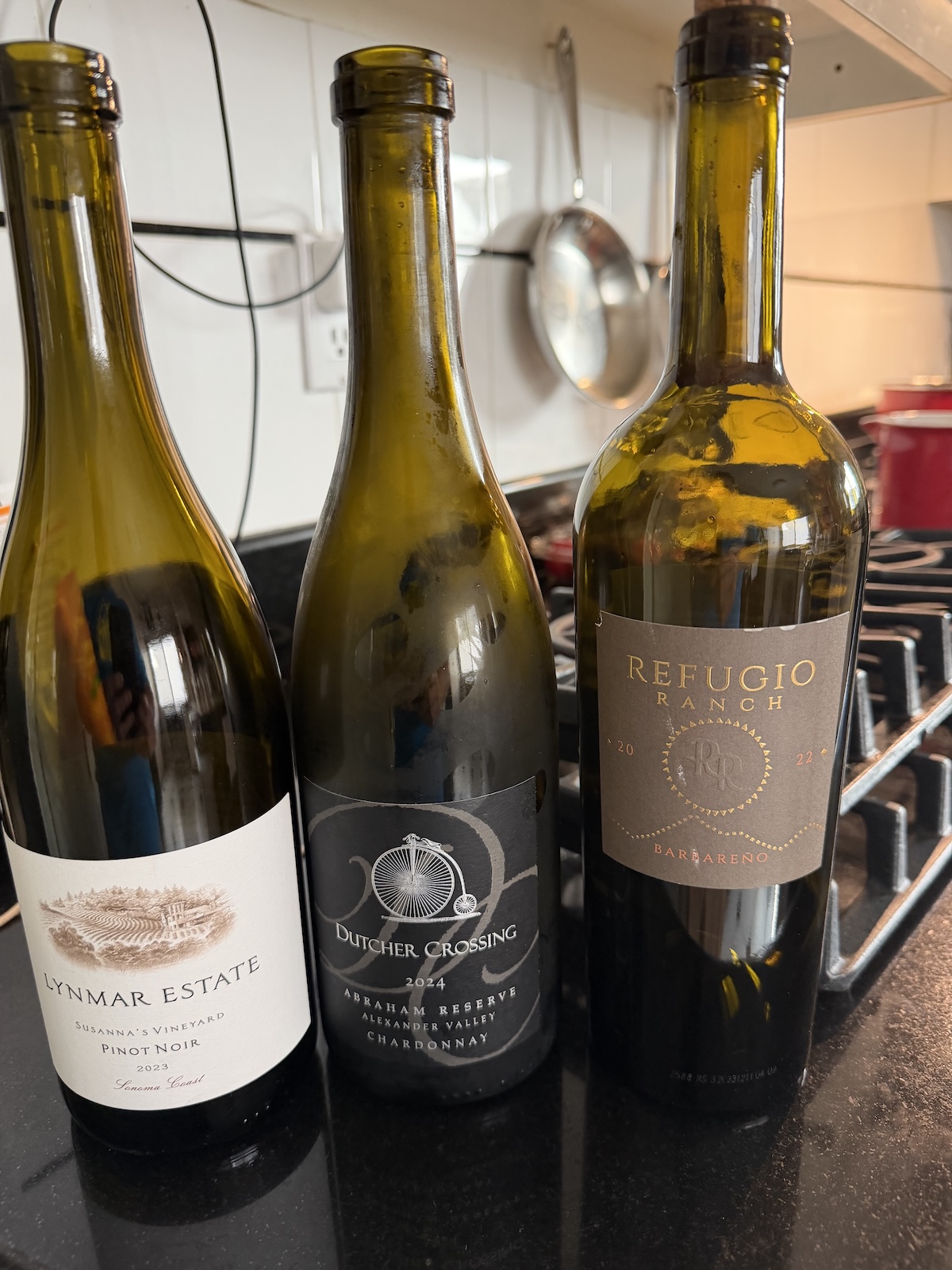
After a career in education, she made her dream come true. She purchased Dutcher Crossing and has been at the helm of the estate ever since. One of her wines is in this week’s Tasting Notes, which you can read here. You’ll also find bottles from Lynmar Estate and Refugio Ranch.
The estate is iconic. A stone winery constructed in 1888 by Alfred Lovering Tubbs is its centerpiece. Tubbs hired a French architect, who used French stonemasons and imported stones to create the A.L. Tubbs Winery. Spending a few hours there is something I recommend.
This building was added to the U.S. National Register of Historic Places in 2013. (Chateau Montelena)
The estate, located in Calistoga, California, is now known as Chateau Montelena, and Matthew Crafton, the latest Wine Talk subject, is its president and winemaker. He’s been with the estate since 2008, and his guidance and vision are worthy of attention. Click here to read what Crafton has to say about the future of the wine industry, where he likes to drink a glass of wine when he’s not working, and other things.
Matthew Crafton has a degree in economics but found his love and passion in the wine world. (Chateau Montelena)
There’s something to be said for a winemaker’s long tenure at one estate. It would be a fine thing to, season after season, become one with a vineyard, with its vines and insects and rows and birds and microclimates. Don Schroeder, the winemaker at Sea Smoke, has been at the estate since 2003, and he knows every square inch of it.
I met Schroeder recently in Los Angeles at a Sea Smoke lunch tasting. The wines were very good, and I enjoyed speaking with him about his experiences in Alaska (we both once lived there), his education, his family, and his enthusiasm for Alsace, which I share. We also, of course, talked about the wines he makes.
Schroeder is the subject of the latest “Wine Talk,” which you can read here.
The Sea Smoke Estate shares an intimate relationship with the Pacific Ocean. (Courtesy Sea Smoke)
It was 1976, and a little thing we call The Judgement of Paris took place that year. In short, American wines largely bested their Gallic counterparts in the tasting, as determined by some fine French palates. The world noticed.
Chateau Montelena was one of the American producers involved in the tasting, and to commemorate the 50th anniversary of the auspicious event the estate is introducing a sparkling wine and a brandy in limited editions. These bottlings mark the first time that the estate has made a sparkling wine or a brandy.
The 2023 Blanc de Blanc and Brandy Release #01 go on sale today, July 3 (the brandy is available in California only). The wine is $125 for Chateau Montelena wine club members and $150 for everyone else, while the brandy sells for $75 (members) and $95 for non-members.
“The Blanc de Blancs and the brandy both trace back to the same ground that produced the 1973 Chardonnay,” said Matthew Crafton, president and winemaker at Chateau Montelena. “They aren’t recreations of that wine, nothing could be, but they are honest expressions of the same vineyards, approached with the curiosity and discipline that have always defined Montelena.”
Matthew Crafton, president and winemaker at Chateau Montelena, sits with some bottles at the estate. (Brockhaus Photography)
The sparkling wine’s fruit — 100 percent chardonnay — comes from Napa Valley’s John Muir Hanna Vineyard, which played a pivotal role in the 1973 Chateau Montelena selection that finished on top in the chardonnay category at The Judgement of Paris. The brandy was distilled from fruit (all chardonnay) harvested from the John Muir Hanna, Belle Terre, and Bacigalupi vineyards, the three sites that provided grapes for the famed 1973 vintage. Montelena plans to release nine additional bottlings of brandy over time.
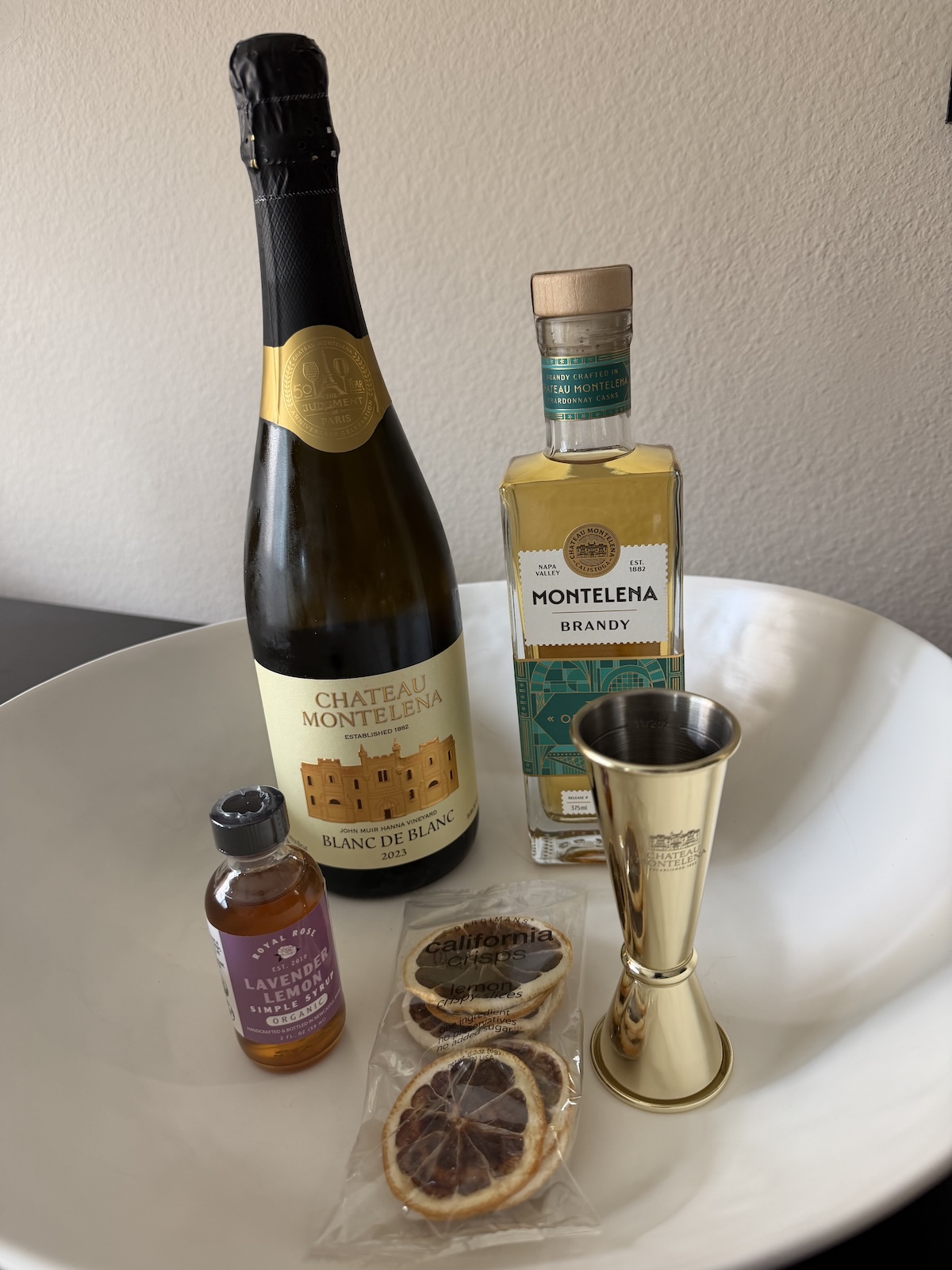
Speaking of the Spirit of 1976, Montelena put together a great kit for the sparkling wine and brandy that includes a bottle of each, along with all of the ingredients needed for the Montelena 76, a cocktail I am looking forward to try.
In honor of a grand occasion and a storied cocktail. (Brockhaus Photography)
If you want to get a bottle of the sparkling wine, click here beginning on July 3. As noted, the brandy is for the moment available solely in California — contact the winery for information on that.
Evan White is the star of the latest “Wine Talk,” and he got his start in the hospitality industry at one of my favorite restaurants in Manhattan. That would be Babbo.
White now resides in Houston, Texas, and he’s the wine director for the Bludorn Hospitality Group, for he which oversees a number of wine lists and beverage programs. I liked hearing his take on problematic customers, and share his enthusiasm about pairing wines with Vietnamese cuisine. Wait until you hear what he says is the best cabernet sauvignon made in the United States.
Bludorn occupies one of my favorite spaces in Houston. (Julie Soefer photo)
Vin de France, how I appreciate thee. You let winemakers focus on grapes no matter their provenance (the fruit, not the winemakers). You are young — VDF as a national classification was born in 2009 — and your potential is immense. You’ve been a great addition to a proud and prestigious legacy, and I think you will mature into a fine individual.
Chardonnay, grenache blanc, viognier, marsanne, mauzac, muscat, and clairette. They are all in this bottle. And skins and whole clusters are used. It’s an orange wine, from Gérard Bertrand, and I opened it yesterday and loved it. It has a suggested retail price of $24.99, and you can search for it here or wherever you like to buy your wine.
Lovely color in the bottle, lively aromatics in the glass. Gérard Bertrand’s 2023 Orange Gold, a vin de France.
The 2023 Orange Gold, a project that sings of the Mediterranean, offers peach, apricot, jasmine, and white pepper as entry points, and those aromatics carry on when one drinks this wine. Your palate might pick up on the notes of apricot and peaches, as mine did, along with a hint of oxidation that is intriguing. Body is medium to medium-plus, while the finish is long and fairly complex.
Bertrand sought to pay homage to the history of Georgian orange wines, and I think this one aced that assignment.
I paired this with a frisée salad whose stars were slices of goat cheese battered with egg and panko before frying and pieces of pears macerated in balsamic vinegar. This wine would also be great with a goat curry dish or a tray of your favorite cheeses.
Pay no attention to the hype and trendiness of orange wine; it’s been around a long time, and will outlast us all. It deserves better than hype.
The latest “Wine Talk” is here, and this one is heavy on pinot noir. Specifically, pinot noir from California. Adam Lee, of Siduri fame, opens up about his journey from Austin, Texas, to making wine with his former wife, Dianne Novy, in California, to founding his current main project, Clarice Wine Company.
Along the way Lee debated alcohol levels with Rajat Parr, surprised Robert Parker with some wine left with Meadowood’s concierge, and made myriad outstanding wines. He’s still making them.
I enjoyed speaking with Lee, and his background and story are fascinating. He majored in French History, knows a lot about the French penal system, and has managed to maintain a passion and enthusiasm for wine for decades now. That’s a good thing.
The Original Farmers Market is a Los Angeles treasure. It was founded at the corner of 3rd and Fairfax in 1934 as a “village” in which local farmers could sell their wares. The site had previously been a 256-acre ranch, and when oil was discovered on it, in 1900, the owner, A.F. Gilmore, replaced his dairy cattle with oil derricks. The city of Los Angeles had yet to encroach on the property as the crude was brought forth from the ground.
When the development of Los Angeles caught up to the property no new derricks were permitted, and, eventually, the Gilmore expanse grew quiet. It stayed that way into the 1930s, until two entrepreneurs, Fred Beck and Roger Dahljelm, convinced Gilmore’s son, Earl Bell Gilmore, that a farmers market would be a great venture for the property. The rest is history.
The Gilmores still own the market, and today it’s home to more than 100 vendors, including grocers, restaurants (the famed Du-Par’s among them) and shops and businesses, from jewelry, clothing, and art stores to barbers, shoemakers, and houseware merchants.
I don’t get to the Original Farmers Market often enough, but I recently attended a wine dinner at a restaurant there, Ettore Vino & Cucina, and not only were the food and wines pleasing, but the visit has also served as a personal directive for me to take myself to 3rd and Fairfax on a regular basis.
Ettore Vino & Cucina is the restaurant and tasting room of Ettore Winery, which is located in Hopland, California. Ettore Biraghi and Sofia Rivier are the winemakers, and the estate, in Mendocino’s Sanel Valley, comprises 64 acres, of which 35 are planted with vines. The property is situated 500 to 600 feet above sea level, and gravelly, loamy soils dominate.
The Ettore estate vineyard is the source of five grape varieties. (Ettore Winery)
The Ettore vineyard lies at the foot of Duncan Peak in the Sanel Valley. (Ettore Winery)
The occasion for my visit to Ettore Vino & Cucina was a winemaker dinner, presented by Biraghi and Rivier, along with Fabrizio de Falco, the restaurant’s managing director. Nine wines paired with a five-course menu was the plan, and I could not have been happier with the pairings if I had selected them myself.
The team behind Ettore Vino & Cucina, Sofia Rivier, Fabrizio de Falco, and Ettore Biraghi, speak to guests at a wine dinner at the restaurant. (Please the Palate)
A menu whose stars were the Bolognese and petit verdot. (Brockhaus Photography)
First, the two wines that pleased me the most: the 2023 Ettore Pure Chardonnay ($18) and the 2021 Ettore Petit Verdot ($38). The former, an unoaked, 100 percent stainless steel wine that does undergo full malolactic conversion, was delightful with the prosciutto di Parma and gnocco fritto, while the latter, partnered with a hanger steak (diaframma in Italian), was the pairing of the evening.
Gnocco fritto and prosciutto di Parma began the wine dinner. (Please the Palate)
Hanger steak paired well with a 2021 Petit Verdot from Ettore Winery. (Please the Palate)
What I like about this chardonnay is its vibrancy: one sip brightens the palate, and it is an excellent food wine. Lemon and jasmine on the nose, nice herbal notes as well. Medium acidity and body and an austere finish result in a wine that drinks above its price point. The alcohol level is 13.5 percent, and 1,296 cases were produced.
The petit verdot was for me the best wine of the evening; Biraghi and Rivier used fruit from vines planted 29 and 26 years ago to produce this wine, which is dark purple in color and full of body. Robust tannins, distinct violet and dark berry aromas, touches of spice (black pepper) and a fine herbaceousness combine to create a beautiful wine. A total of 168 cases were produced.
A sformato di carote was served over a gorgonzola sauce. (Please the Palate)
Tagliatelle alla Bolognese was a great companion for the Ettore petit verdot. (Please the Palate)
Ettore farms organically, and uses products certified by California Certified Organic Farmers, a nonprofit group that promotes organic agricultural practices through education, advocacy, and certification. Biraghi, who was born in Varese, Italy, and lives in Switzerland, and Rivier, who was raised in Argentina and trained in Switzerland and now resides in the Mendocino Valley, both put a premium on making low-intervention wines, and the phrase “made with organic grapes” is displayed prominently on the brand’s bottles. A major component of the duo’s winemaking is the Purovino method, which is designed to reduce or eliminate the addition of sulfites. Grapes are treated with ozone, which sanitizes them and helps manage oxidation. All fruit at Ettore is harvested by hand.
Biraghi first visited Mendocino in 2015, and had a hunch that its terroir would suit his goal of making low-intervention wines; his project was established in 2019, though the winery itself is more than 100 years old. The brand includes olive oil as well, made from trees on the Ettore property.
The other wines I tasted at the dinner included Ettore’s 2022 and 2019 Reserve Chardonnay ($22), 2022 and 2019 Rosso ($28), 2022 and 2020 Cabernet Sauvignon Signature ($34), and the winery’s 2019 Merlot ($35). The Rosso bottles — a blend of cabernet sauvignon, merlot, and petit verdot — were paired on the menu with the tagliatelle alla Bolognese, to wonderful effect. Rich meat sauce, rich, full-bodied wines that cut through the bold dish, toothsome homemade pasta … nothing more needed.
If you are in Los Angeles I recommend adding a visit to the farmers market and booking a table for dinner at Ettore Vino & Cucina. You can purchase Ettore wines here, or ask for them at your favorite merchant.
Memories of wines I’ve tasted persist, in some instances for a long while. I left Brooklyn — bound for a newspaper job in Abu Dhabi — back in 2008, and a few evenings before my departure I shared a table with a friend at a favorite restaurant near my apartment. I brought along a 1991 Château Pavie, and remember still my first sip of that bottle. Elegant and ethereal, well suited to the weather, cuisine, and occasion. On another evening I was in Paris, at a wine bar in the Marais hanging out with colleagues after work celebrating a milestone publication. The bottle this time was something from the Languedoc, an inexpensive little red wine that likely cost all of 10 euros (a 1999 Château Pavie can be had for $279.99 on FineLiquors.com). These two wines had nothing in common, save their country of origin, and both are indelibly etched in my memory.
I would love an endless supply of this.
That’s what wine, at its best, can do. It allows us to enjoy the moment, the foods we pair with the bottle, the design and sounds of the dining room, the smile of a friend, the profound immediacy. Then, months, years, or decades later, the memory of the wine brings pleasure once again. You have similar memories, I imagine, of bottles and tables and dishes and the people with whom you shared wines and conversation. Sounds and scents and images and tastes and … so much more that might not be knowable to you until one day you are sitting alone at a table in a restaurant and into your mind slides memories of that long-ago dinner and the wines served at it.
I try to keep this in mind when opening a bottle, whether I’m sampling for reviews or sharing, say, a Pfalz riesling with friends at a meal. I know the wine means something in the moment, and the idea that certain wines will sustain me in manner other than in-the-mouth gustatorily gives me pleasure.
Now, on to a new year of tastes, flavors, dinners and dishes, and, of course, memories.
Chris Kajani has been making wine at Bouchaine Vineyards since 2015.
I tasted three different 2023-vintage chardonnays from Bouchaine recently, and winemaker Chris Kajani is, based on my impression of these wines, continuing her astute, intuitive stewardship of the Carneros AVA estate. The lineup included Unoaked ($40), Estate ($40), and Reserve ($70) chardonnays, and I sampled them at one sitting, each bottle chilled to 52 degrees Fahrenheit.
The 2023 growing season was, according to Bouchaine’s team, “a lesson in patience.” A cooler summer led to slower ripening and later harvest — the end of September instead of the more typical late August. The chardonnay fruit had additional time to develop, and that time and quality is well represented in these wines.
A ‘naked’ chardonnay from the Carneros AVA.
The Bouchaine Unoaked chardonnay is suited to those who like to drink wine made from this noble grape devoid of oak influence, malolactic conversion (some winemakers, however, do allow no-oak chardonnay to undergo malo conversion) or bâtonnage. I like wines from Chablis, and I really liked this chardonnay from Napa’s Carneros district. Sweet-tart apple aromas, a touch of lemon blossom and other citrus flavors, fresh, crisp, vibrant, and excellent with grilled shrimp basted with garlic butter — my pairing for dinner on the evening I sampled these Bouchaine wines. Drink now, or hold for a year or two if curious about how it will age. Click here to purchase.
The Estate Chardonnay made by Kajani does see oak, and here’s some specificity from the Bouchaine team: It was bottled on Aug. 5, 2024, and aged for 10 months — 50 percent malolactic conversion, 90 percent barrel fermented, 10 percent tank fermented, 18 percent new oak. Kajani produces more than a dozen chardonnays from the estate’s blocks and blends what she deems the best of them for the final product. I liked this wine’s beguiling combination of richness and vibrance. Oak is not overwhelming, and the mélange of citrus and apple made me very happy. There’s no reason to not serve this with a roast pork loin and share with a few good friends. Click here to purchase.
This chardonnay pairs well with scallops.
The final bottle I tasted from this trio was the Reserve Chardonnay. The Bouchaine team said its intention here was “to create a concentrated, lush style of Chardonnay,” and Kajani succeeded in that. It was fermented 100 percent in barrel (38 percent new oak), and aged for nine months. Fruit was harvested from October 16-19, and bottling took place on Aug. 5, 2024; 200 cases were produced. Malolactic conversion is in full force here, along with sur lie aging. Carneros chardonnay is known for its cool-climate leanness and acidity, and that shines in this wine; the symbiotic play of oak and malo conversion and Bouchaine’s 1984-planted chardonnay performs with aplomb here. On the evening following my Bouchaine tasting session I wrapped some sea scallops in jamón Ibérico and seared them, and I drank the Bouchaine Reserve Chardonnay with those scallops. Delicious, sensual interplay. Purchase here.
This dry amber wine from Georgia is a great value.
Another 2023 I sampled recently is the Vazisubani Estate 3 Qvevri, an amber wine from Georgia. It’s a blend of rkatsiteli (15 percent), mtsvane (40 Percent), and kisi (45 percent), grapes identified with the country that many consider the birthplace of wine: research has documented more than 8,000 years of continuous winemaking in the region. Qvevri refers to the clay vessels traditionally used by Georgians; wines are fermented in the vessels underground. This orange wine carries a suggested retail price of $19.99, making it in my opinion a great value. Fruit, from vines planted between 1,500 and 1,800 feet above sea level, was harvested by hand and partially destemmed. Great acidity and robust tannins, dried apricots, green almond, licorice root, orange peel. This sees no oak, but something in the mouth is evocative of baking spices or vanilla. I’d love to drink this wine with a chicken dish featuring a walnut-based sauce.
Cleto Chiarli is a historic producer of Lambrusco.
Rounding out this tasting roster is the Cleto Chiarli “Centenario” Lambrusco di Modena DOC Amabile ($15). I am an avid booster of Lambrusco, and Cleto Chiarli is one of my favorite producers. The Centenario was introduced 100 years after the winery’s 1860 founding, and is 100 percent Lambrusco Grasparossa. Alcohol is 8 percent, so keep that in mind when you are looking for something refreshing to drink with pizza or a hamburger. The high acidity of this wine balances its sweetness in a manner that makes one keep going back for one more sip. The Charmant method is used here, and if you are wondering, “Amabile” refers to a wine that is sweet, but not so sweet that dessert is its only wise pairing. I would, however, have no issue if you chose to open this bottle and drink it with a slice of not-so-sweet chocolate cake. Purchase here.
Thanksgiving is the food holiday, at least in my family’s culinary tradition. My maternal grandmother made the best stuffing I’ve ever tasted, and while her Christmas fruitcakes and mincemeat pies are the stuff of legend, we always privileged Thanksgiving when it came to family holiday feasts.
I was not drinking wine as a child at those gatherings at my grandparents’ house in Savannah, but now I can’t imagine sitting down at the table on the last Thursday of November unless a few bottles are in the mix, wines selected for an occasion that likely features turkey, cranberries made your way (I like mine a bit spicy), potatoes or squash, perhaps sautéed green beans … you fill in the blank, of course, depending on your traditions. I have made shrimp as an appetizer for Thanksgiving, and last year at a Friendsgiving meal my contribution was a green chile pork stew.
Choosing the right wines to serve with your Thanksgiving feast is not rocket science. (Circe Denyer)
So, based on general American habits concerning Thanksgiving foods, and with some flexibility added for regional or familial variations, which wines should be on your menu come November?
Word to the wise: Champagne or other sparkling wines are a must, and I will accept no debate here. You cannot go wrong selecting several bottles from this diverse category. Offer guests a glass of cava as they cross your threshold, and consider serving gougères with that Spanish treasure (I like this recipe from David Lebovitz). For the table, and if you are serving turkey, feel free to indulge your Champagne obsession and knowledge. Pair the main course with a vintage brut, and with your desserts (pumpkin pie, pecan pie, a sweet casserole) serve a demi-sec. You can also opt for a Sauternes or a Trockenbeerenauslese with your sweet dishes.
Cava is a Spanish treasure, and it’s a great addition to the Thanksgiving table. (Marcelo Verfe)
Unless you are going extremely non-traditional and plan to serve steak, avoid Cabernet Sauvignon and anything blended with that grape (and anything with robust tannins). Turkey, mashed potatoes, and your squash casserole will hate sharing the stage with with those otherwise fine wines. I’m sure you drink a lot of big Napa reds on a regular basis, so missing one day won’t damage your psyche. If you must open a bottle of your favorite big red, it would be advisable to make it something with age; softer tannins are a better fit with the lower fat level of turkey.
Chardonnay is a common refrain around this time of year, and chablis definitely has a place on your menu. Fruity and crisp, plus graced with wonderful acidity, these wines will pair well with your turkey. If you want something with a bit more oak, feel free to go that way. Better yet, serve both types and provide your guests’ palates with a chance to compare and contrast.
Two Perennial Wines I’ll now proffer two names that have featured at my Thanksgiving table for years and years. I’m referring to Pinot Noir and Beaujolais. The tannins generally found in a good Pinot are of the softer variety, and a medium body will suit your turkey well. Cherry and mushroom notes, plus vibrant acidity, are magic at Thanksgiving. You can’t go wrong with something from Burgundy, and Oregon is another stellar source.
Beaujolais is an easy and popular choice for Thanksgiving, and gamay’s mid-level alcohol and superb fruit profile combine to great effect at the holiday table. I served a Morgon at my inaugural Thanksgiving gathering, a decision that began my love affair with this wine.
I’ll add here — and this applies to all of your wine selections for the holiday — that it’s a good idea to sample every wine you plan to serve before you make your final decisions. Consider your palate, and the palates of your guests, as well as your particular menu, especially if your food lineup wanders off from the traditional.
Riesling is a wine that gets along well with Thanksgiving.
And now to Riesling, my liebling grape. I love to make a savory gravy from the drippings of my turkey, and the high acidity of this grape makes my mouth water, literally when eating it and when I merely think of this combination. I am also a dark meat guy, and, again, that acidity cuts through the fat and richness of a turkey leg and stuffing made from the gizzards, heart, and liver. Buy a few dry and off-fry versions of Riesling and sample them, based on your menu.
The Guests are the Stars No matter what you serve with your Thanksgiving feast, don’t stress. I’ve given you some tried-and-true options, but do not feel hemmed in by my guide, except for that Cabernet Sauvignon advice. In addition, there’s no need to be a wine snob on this special Thursday. Sure, you might want to impress your guests with your taste and knowledge, but the wines aren’t the star here, and neither are you. Your grandmother might prefer a Chardonnay rich with oak, or uncle Joe’s love could be White Zinfandel. What better way to show them you care than putting “their” bottles at their places at the table for their sole consumption, a gesture that need not interfere with the rest of your wines?
A meal in Malibu: Joan Didion, her daughter, Quintana Roo, and husband, John Gregory Dunne. (Henry Clarke/Condé Nast/Shutterstock)
To close, I urge you to read this piece, which was published today in The New York Times; it is a beautiful story about Joan Didion’s love for Thanksgiving dinner. The author, who passed away in 2021, was a thoughtful cook, and she planned meticulous holiday dinners. From Patrick Farrell’s article: “It has always seemed like such an awful holiday,” a friend wrote her after one dinner, “but you made it something quite wonderful.”
Leave a comment and let me know what you’ll be pouring on Thanksgiving.






Recent Comments