Wine, Food, and Other Vital Things

Tag: Bordeaux

Tasting Notes: Wines for Duck Breast, Meatloaf, and Salmon

A Bordeaux-stye red blend from the Ballard Canyon AVA is up first in this edition of Tasting Notes, and it’s a selection many of you will want to add to your cellar or wine list. I tasted the 2021 Fenix, from Jonata, on a recent afternoon, along with a few other bottles, and this vintage puts on display the methodical yet agile and intuitive stewardship of winemaker Matt Dees.
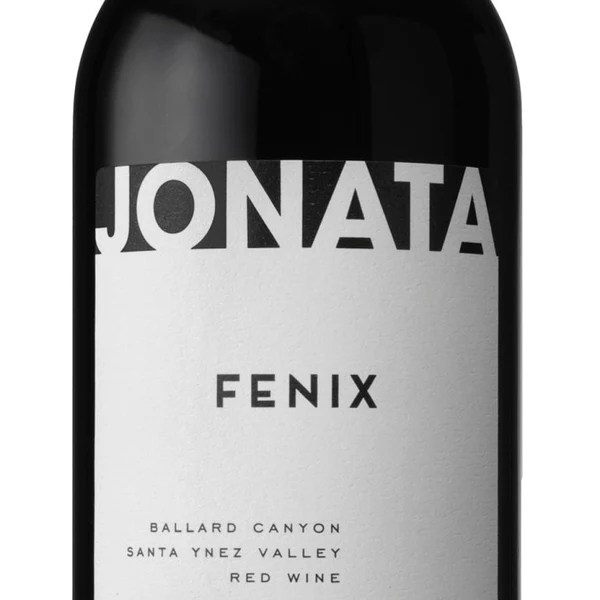
The blend is 77 percent Merlot, 14 percent Cabernet Sauvignon, and 9 percent Cabernet Franc, and if you, as I do, love Cabernet Franc, you’ll enjoy the 2021 Fenix even more, because that grape was beautifully evident during my sampling, as it was the next day, when I poured the wine at dinner, pairing it with a duck breast seasoned with salt and star anise.

Where did Jonata get its name? Matt Dees explains. (Jonata)

Dees, who has been overseeing Stan Kroenke’s Jonata since 2004 (and whose purview now includes Kroenke projects The Hilt and The Paring) came to the profession without a degree in oenology, though he did earn a degree in plant and soil science at the University of Vermont, a curriculum relevant to winemaking.

Back to the 2021 Fenix, which was retailed with an average price of $100 (look for it on sites such as Benchmark Wine Group and K&L Wine Merchants, and inquire at your preferred local purveyor). You can also consider becoming a Jonata member for access to current releases and earlier vintages. The 2021 spent 20 months in 50 percent new French oak and 50 percent twice-used French oak barrels (225 liters). Note: One barrique holds 300 750-milliliter bottles of wine. Alcohol clocks in at 14.5 percent, and 1,265 cases of the 2021 were produced.

Dees recently told Levi Dalton in an episode of “I’ll Drink to That” that the Jonata vineyard is the sandiest he’s ever seen, adding that “it’s a beach.” When the Jonata team was surveying the property and assessing it for viability, several winemaking consultants told them that they would be better off growing asparagus or developing a golf course — the sand would be perfect for bunkers. I’m glad Dees didn’t listen to them. The soil there has been producing some stellar wines.

Matt Dees takes soil seriously.

Complex, decadent, focused, architectonic, confident. Those terms came to mind when I sat with the Fenix. Black and dark-blue fruit, buffed leather, and violet notes arouse the olfactory senses, while blackberries, sage, pristine forest floor, plum, and wild mushroom — perhaps chanterelles — meld wonderfully on the palate. Duck breast, as I wrote, pairs well with this wine, as would a rack of lamb. You need some fat to marry the robust (yet remarkably refined) tannins. This is a wine that will please you now, or in 10-plus years if cellared properly.

On to New Zealand

We’ll venture to a wine from New Zealand next, the 2022 Pencarrow Pinot Noir, which I tasted alongside another Pinot from that island country (the latter selection has among its team a very famous name — more on that below).

This Pinot Noir is a steal for $30.

Palliser Estate makes the Pencarrow line, which also includes a Chardonnay, a Pinot Gris, and a Sauvignon Blanc, all made from fruit sourced (100 percent) from Palliser estate’s Marlborough-based vineyards. Guy McMaster is the winemaker, alcohol is 14 percent, and 73 percent of the fruit came from the Pencarrow Vineyard, 24 percent from the Woolshed Vineyard, and 3 percent from the Pinnacles Vineyard. The (mainly) wild-fermented wine is cold-soaked, then pump-overs and plunging take place, followed by 10 months in oak barrels.

As with the Jonata Fenix, I sampled the Pencarrow Pinot Noir on a sunny afternoon immediately after opening the bottle (a screw cap) and finished it later with food. The wine is an attractive light ruby in the glass, an inviting hue. A faint white pepper note marks the aroma, along with wild raspberry, red cherry, and fruity nutmeg. Those profiles continue when one tastes the Pencarrow Pinot Noir, and I picked up some mushroom-centric umami as well. Tannins are powdery, and the finish is sustained. This wine, which retails in the $30-$35 range, is fun to drink, pure fun. Later that day I paired it with a meatloaf made from beef and pork and sun-dried tomatoes and could not have been happier.

A Famous Name

Does the name Sarah Jessica Parker ring a bell? It likely does. She is the famous individual to whom I referred earlier in this piece, and she’s the Invivo X proprietor — her official title with the brand. The 2022 Invivo X SJP Pinot Noir, which Wine Spectator placed at number 82 on its 2024 Top 100 wine list, closes out this edition of Tasting Notes. If you are skeptical of wines linked to celebrities, I understand, but that sector is too large and varied for blanket aversion. This bottle is worthy of your consideration.

From New Zealand comes this wine, which represents a great value.

Marlborough is the region from which the grapes for this wine hails — with a touch of Central Otago fruit added in. It has a suggested retail price of $25, which in my opinion is more than fair. This Pinot Noir is a bit darker in the glass than is the Pencarrow, a hue that is nonetheless fetching. No one I know would mistake this wine for anything other than a Pinot Noir; there is a lively black cherry component, plus allspice and earthy leather, on the nose. The aroma promises something satisfying, and it doesn’t disappoint. A taste reveals cherry and raspberry, with muted oak and smoky spice.

Sarah Jessica Parker and Rob Cameron taste Invivo X SJP samples. (Courtesy Invivo Wines)

The Invivo X SJP has an ABV of 13.5 percent, and fruit was harvested by hand and de-stemmed into open fermenters. Indigenous yeasts began fermentation following a cold-soak of 7 to 10 days. The wine spent 11 months in 35 percent new and 65 percent used French barriques, and malolactic fermentation occurred in barrel.

What did I pair this Pinot Noir with? Salmon. I had a few skin-on, wild-caught coho filets and wanted to see how they’d do with the wine. I seared them (skin-down first; be sure to dry the skin fully before cooking) after seasoning with salt and pepper, and finished by adding a tablespoon of butter to the pan and basting the filets with it. The wine’s tannins complemented the fish’s richness and my guest was ecstatic.

The wines in this Tasting Notes demonstrate terroir well, and the winemaking quality is evident. If you try one (or all of them) let me know what you think. The next edition of Tasting Notes will include a Texas sparkling wine, a California Pinot Noir, and a Tuscan red that loves being chilled.

Michael Kennedy Has Sailing and Zinfandel on His Mind

I love to talk about wine with people who share my passion for it. We open bottles, we trade stories about travel and soil types, terroir and residual sugar, and we talk of taste and food and restaurants. We recommend wines to one another, we drink, and we learn a lot.

In Wine Talk, I introduce you to friends, acquaintances, and people I meet as I make my way around the world, individuals who love wine as much as I do, who live to taste, who farm and make wine. You’ll appreciate their insight, and I hope you’ll learn something from them as well. 

I was waiting on Michael Kennedy at the bar. I had tasted his wines the week before, and was looking forward to meeting him in person. Email correspondence had given me a good idea of the man — thorough, enthusiastic, intelligent — and I’m always happy when my initial assessment is verified. In Kennedy’s case, I was correct.

He had come to Houston to sell his wine, which I was representing with Monopole Wines. Component is Kennedy’s label, and wines bearing the name hail from Napa and Bordeaux. He and his partners have three lieux-dits (left and right banks) in Bordeaux from which they source fruit (Merlot, Cabernet Franc, and Cabernet Sauvignon), and in Napa they have made wines with grapes grown in the Yount Mill Vineyard (Semillon), the Caldwell Vineyard (Cabernet Franc), and on Pritchard Hill (Cabernet Sauvignon, Cabernet Franc, and Petit Verdot).

Lunch was a glass of wine and a croquet madame, paired with lots of conversation, and afterward, I was convinced that Kennedy was someone I would be glad to know. We visited a few restaurants, and a country club or two, and sold some wine. We had dinner that evening, at Tony’s, joined by a few people Kennedy had met on Grand Cayman — he was a sommelier at Blue by Eric Ripert at the Ritz-Carlton — and the conversation continued (and continues).

Kennedy’s career includes serving as the beverage director at the Cayman Cookout, and his first vintage at Component was 2013. If you haven’t tasted what he is making, you will be in for a pleasant experience. I look forward to again sharing a table with him after the pandemic’s demise allows such pleasures.

Here is Kennedy in Wine Talk:

James Brock: Tell us about three wines you think are drinking well at the moment. What makes them worthwhile? How about a food pairing for each one?

Michael Kennedy:  In our portfolio, I have really been loving our Sémillon this summer. It’s über fresh, with a bit of saltiness — perfect with raw oysters or other beach foods like ceviche. I have also been drinking quite a bit of our 2017 reds from Bordeaux. It’s a “fresh” vintage, so that means they’re drinking well young. Unlike in 2016, where our wines were austere and serious, the ’17 allows for some immediate pleasure out of the bottle. Strange, of course, to say young Bordeaux at this price point is drinking well, but I love vibrancy and acidity, which it delivers.

I am drinking these wines with summer meats — meaning pork tenderloin, crispy-skin chicken — especially if prepared simply on the grill, perhaps with some herbal friends like grilled rosemary. This will really trigger the herbacious qualities of the wine, while allowing the juicy acidity to play well with mid-weight meats. (2018 Component Semillon, Yount Mill Vineyard, Napa $68 a bottle, 2017 Component La Carrière Cabernet Franc, Saint-Emilion, Bordeaux  $170 a bottle.)

JB: If cost was no consideration, tell us the one bottle you would add to your personal collection, and why?

MK: If cost was no matter … I’d love to have a cellar full of Château Lafleur. I truly have not had an experience quite like I had visiting the estate and learning from their winemaking team. The wine is so light, almost hard to believe it comes from Bordeaux, but what it doesn’t have is where I fall in love. It replaces weight with flowery elegance and toys with your mind. At one moment, the wine is intense, in the very next it is subtle. Alternatively, I’d love to acquire all of the old American Zinfandels out there — the classics from Ravenswood, Ridge, Swan — even further back from Martini and others. This varietal is so underappreciated — in fact, I like it that way.

JB: What is your favorite grape, and why?

MK: I wish I was cool enough to say something like Palomino or even Chenin Blanc, but I have to say the white wine I drink most at home is Chardonnay. I am a sucker for Bourgogne Blanc. Benjamin Leroux described it as the “red wine of white wines,” and that’s true. It can be so complex — texturally, aromatically — and confounding as well. If there’s another varietal I love, it’s Cabernet Franc — the feminine to the masculine Cabernet Sauvignon. 

Component has roots in Bordeaux and Napa.

JB: How about one bottle that our readers should buy now to cellar for 10 years, to celebrate a birth, anniversary, or other red-letter day? 

MK: Buy more American Zinfandel — something like Bedrock from a historic vineyard site (Monte Rosso, planted in 1886, is a good start). Not many people realize that some of the consistently oldest vines for commercial production are right here in the US. Plus, Zinfandel ages beautifully.

JB: Where is your go-to place when you want to have a glass or bottle?

MK:  All I want to do right now is go sailing with a bunch of friends and a cooler filled with entry-level white Burgundy, Vinho Verde, Muscadet and Pinot Grigio. Maybe next year …

JB: If there was one thing you wish everyone would keep in mind when buying and drinking wine, what is it?

MK: Wine is wine, you know? One of the coolest guys in the business is a man named Alessandro Masnaghetti. He’s an Italian mapmaker, and he said something that struck me recently in regard to “famous” winemakers. He talks about the phenomenon of “genuises” in winemaking being compared to Einstein or Dante — and the ridiculousness of this. One of those men discovered the theory of relativity, winemakers make wine for people to consume. I don’t know, I guess I just wish people would enjoy wine more — and stop “analytically tasting” wine. Just love what’s in your glass (but make sure it’s tasty). 

JB: What is your “wine eureka moment,” the incident/taste/encounter that put you and wine on an intimate plane forever?

MK: I feel like I’ve been talking a lot about Bordeaux, but, oh well. I have two moments, and both over a bottle of Bordeaux. 

First, a 1996 Château Montrose with my then-mentor, Allyson Gorsuch. We had worked a long tasting event and one of the benefactors of the event put out cases of wine from his cellar for us (the sommeliers working the event) to enjoy. I was just studying for my Certified Sommelier, and Gorsuch was studying for her Advanced. Everyone immediately took the Burgundy and Napa big shots, and we went with Montrose. It was in the “bret” days of the estate — and man was it awesome. We popped the bottle, sat down, and talked for two hours, watching the wine evolve. Over that conversation (which was arguably better than the wine), we saw this wine take a wild ride. It taught me about complexity.

The most important wine lesson I learned over a bottle of wine happened in 2012, when I had been given a bottle of 2005 Carruades de Lafite (the second wine of Lafite). I opened it with essentially the only wine collector I knew at the time. He had an excellent old-world cellar, and in an effort to prove to him that I knew something about wine (I had recently passed my Certified Sommelier) I googled everything on the internet I could find about the estate, the winemaker, the vintage, etc.

I opened the bottle and started babbling through everything I memorized earlier that day. This kind and experienced collector was so gracious; he listened and engaged sparingly. And when I ran out of information, it was a much quieter turn in the evening. After some time of silence, he started telling me things like, “This wine has really improved since I tasted it shortly after release five years ago,” and, “It reminds me of how the 1990 tasted at this stage,” and, “It seems to me that this wine will have a similar path of aging to the 1996”. It was in that moment that I realized I cannot “memorize” experience and that I should shut up, listen, and drink as many great wines as I can. To this day, I have to fight the urge to say too much, because I don’t want to miss something of meaning from someone more intelligent, experience, and generous than myself. (Although look how much I wrote here.) 

JB:What has been the strangest moment or incident involving wine that you have experienced in your career?

MK: Too many to mention. It’s an industry filled with characters! One of my favorites, though, is also one of my most embarrassing. I was 21, first month in the industry — straight out of college — and my brother’s friend who owns a really excellent distribution company invited us to a portfolio tasting. We of course decided to attend and loved every minute of walking around experiencing the different wines and producers.

It was all well and good until we walked up to the table of a top Italian winemaking family, hosted by the beautiful daughter of the founder. She was in a stunning white dress and had opened some of their family’s top red wines. There was even an older vintage in a large, wide-based decanter. I tasted through, somewhat starstruck about the wines, and when it came for her to pour us the older wine, I took a deep sip of it. My wonderful brother whispered a comment about her not being able to use the decanter well right as the wine hit my palate, and I sprayed the family’s rare red wine all over this woman in the white dress. I was mortified, and basically blacked out and ran away. I saw her years later from across the room at Food & Wine Classic in Aspen and immediately changed course to avoid her in the off chance she recognized me. So, yeah. 

And it was good …

JB: What is your favorite wine reference in a work of literature or a film?

MK: I feel like there are plenty of deep and philosophical references out there, but I recently started looking at biblical wine references. I found a diagram of a wine press from Jesus’ times and then decided to see exactly how much wine Jesus made as his first miracle. Turns out, we know quite exactly how much wine: “Six stone water jars, containing 20-30 gallons each”. That’s about equal to 1 ton of grapes or two standard barrels, or 50 cases of wine. Man, I would have loved to have tasted that. 

Want More Wine? Read On:

Spain Opened the World of Wine for Spottswoode’s Aron Weinkauf
Alta Colina’s Molly Lonborg Wants a Bottle of Château Rayas
Mumm Napa’s Tami Lotz Talks Wine and Oysters
James MacPhail on Pinot Noir, White Burgundy, and Russell Crowe
A Very Proper Sparkling Wine
Talking With David Ramey
A Merlot That Your Snob Friend Will Love
French Couple Make a Sauvignon Blanc in California
A Perfect Afternoon Chardonnay
Terry Theise Talks Reisling
A New Wine Wonderland
Paris Wine Goddess Tells All
Rice Village Wine Bar Has a Cleveland Touch
A Texas White Blend for Your Table
A Pinot Noir Full of Flavor
This Pinot Gris From Oregon Pairs Well With Cheese
Willamette, Dammit!
A Value Rioja
Drink Pink!
Underbelly Veteran Goes for Grenache
A Man of Letters and Wine
Ms. Champagne Wants a Nebuchadnezzar
The Wine Artist Goes for Chardonnay
This American Loves Spain and Its Wines
Houston’s Wine Whisperer Has a Soft Touch
Blackberry Farm’s Somm Pours in Splendor
Mr. Pinot Noir: Donald Patz of Patz & Hall
A Cork Dork Wants to Spend More Time in Tuscany
Sommelier Turned Restaurateur Daringly Goes Greek
Texas Master Sommelier Debunks Wine Geeks
A Bottle From Gigondas Changed This Houston Man’s Life

Oil Man Falls in Love, and the Rest is Good-Taste History
Ryan Cooper of Camerata is a Riesling Man
Mixing It Up With Jeremy Parzen, an Ambassador of Italy
Sommelier at One of Houston’s Top Wine Bars Loves Underdogs

© 2026 Mise en Place

Theme by Anders NorenUp ↑